Dheya Engineering Technologies PVT LTD

Dheya Engineering Technologies PVT LTD
CTO, Dheya Engineering Technologies Private limitedefficiency.

Introduction
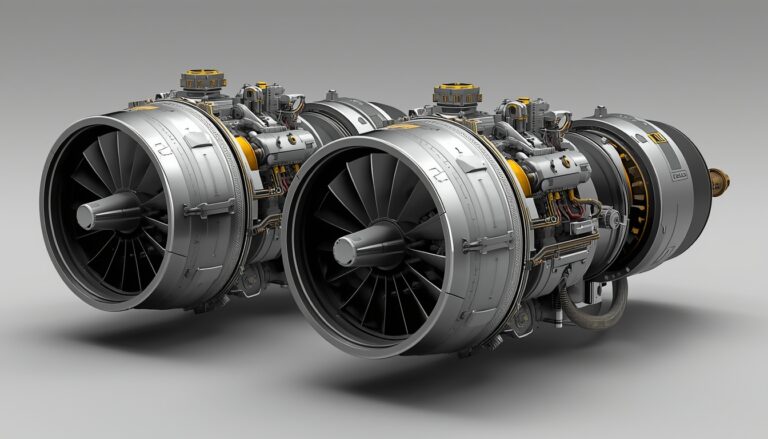
Micro turbojet engines, typically producing thrust outputs between 200N and 1,500N, have emerged as critical propulsion solutions for unmanned aerial vehicles (UAVs), target drones, loitering munitions, and miniaturized power generation systems. At the heart of reliable micro turbojet operation lies a deceptively complex subsystem: the startup ignition system. Unlike their larger counterparts where combustion chamber volumes provide generous residence time for fuel-air mixing and flame propagation, micro turbojets feature miniaturized combustion chambers measuring just 50-150 mm in length, leaving milliseconds for successful ignition before the mixture exits the combustor. This fundamental constraint—coupled with extreme environmental conditions, stringent size and weight limitations, and demanding reliability requirements—makes compact ignition system development one of the most challenging aspects of micro turbojet engineering.
The ignition system must reliably initiate combustion across diverse operating conditions: ambient temperatures from -40°C to +55°C, altitudes from sea level to 4,000+ meters, varying fuel types and qualities, and humid or dusty environments. Failed starts waste time, battery power, and fuel while potentially flooding the combustion chamber with unburned fuel that creates hazardous restart conditions. Multiple failed start attempts in target drone or tactical UAV applications compromise mission readiness and operational effectiveness. As military and commercial applications increasingly demand autonomous, rapid-deployment systems with minimal operator intervention, the pressure intensifies for “first-start reliability” approaching 99%+ across operational envelopes—a formidable engineering challenge requiring sophisticated integration of electrical, thermal, aerodynamic, and control system technologies.
Ignition System Architectures and Technologies
High-Energy Capacitive Discharge Systems
The capacitive discharge ignition system represents the dominant technology for micro turbojet applications, having been universally accepted across the gas turbine industry for its ability to deliver exceptionally hot, high-voltage sparks covering large ignition zones. These systems store electrical energy—typically 12-20 joules per pulse—in capacitor banks charged to 2,000-4,000 volts, then rapidly discharge this energy through solid-state switching devices (thyristors or silicon-controlled rectifiers) into igniter plugs located within the combustion chamber primary zone.
The exciter unit—the heart of the system—converts low-voltage DC input (typically 12-28 VDC from aircraft electrical systems or battery packs) into high-voltage charging current, accumulates energy in storage capacitors, and controls discharge timing to igniter plugs through trigger circuits synchronized with fuel injection sequences. Modern solid-state exciters utilizing pulse power thyristors (PPTs) specifically engineered for rapid current rise rates (di/dt) have replaced older designs employing multiple series-ganged conventional thyristors, achieving volumetric efficiency improvements of 30-40% while enhancing reliability through reduced component counts.
Advanced bipolar discharge configurations—alternating current flow direction during the spark event—eliminate wave shaping networks while improving ignition reliability under adverse conditions including poorly atomized fuel, contaminated air, and extreme temperatures. Peak power delivery, critical for consistent light-off under challenging conditions, reaches 50-100 kW instantaneous levels despite modest average energy consumption. Spark duration typically spans 100-500 microseconds, with repetition rates of 1-4 sparks per second during startup sequences providing multiple ignition opportunities during each fuel injection cycle.
Torch Igniter Systems
Torch igniters represent an alternative technology particularly valuable for difficult-to-ignite fuel compositions, high-altitude relighting, and applications requiring continuous ignition energy over extended durations. Rather than producing a spark directly in the main combustion zone, torch igniters employ a small auxiliary combustion chamber with its own fuel injection and spark plug system, generating a high-velocity, high-temperature flame jet that projects into the primary combustor to ignite the main fuel-air mixture.
The torch configuration delivers several advantages: protection of the spark plug from the harsh primary combustion environment extending service life, enhanced ignition energy through sustained flame jet rather than brief spark events, improved reliability with low-BTU or heavy liquid fuels requiring elevated ignition temperatures, and flexibility to adjust torch fuel flow independently optimizing ignition conditions without affecting main fuel scheduling. Gas turbine manufacturers including GE employ torch igniters in large industrial turbines where the additional complexity justifies improved reliability, though miniaturization challenges have historically limited adoption in micro turbojet applications.
Recent development efforts targeting micro turbojets have produced compact torch igniter designs weighing under 150 grams and occupying volumes of 200-300 cm³, making them viable for applications where first-start reliability justifies the added mass and complexity. Computational modeling of torch igniter flame propagation characteristics demonstrates effective ignition zone coverage with penetration depths of 20-40 mm into the primary combustor at velocity gradients sufficient to stabilize combustion under crossflow conditions. However, challenges persist including fuel cracking and gumming within torch fuel passages during inactive periods, thermal management of the torch chamber under sustained operation, and control system complexity coordinating torch and main fuel sequencing.
Glow Plug Ignition Systems
Glow plug ignition systems, widely employed in small turbines where extreme size and weight constraints dominate design priorities, operate fundamentally differently from spark-based systems. A resistive heating element—typically constructed from nickel-chromium or platinum alloys—receives continuous electrical current heating the element to incandescent temperatures of 900-1,100°C. When fuel spray contacts the glowing element, surface ignition occurs initiating combustion without requiring spark generation.
The Pratt & Whitney Canada PT6 and ST6 small turbine engines pioneered glow plug ignition for aviation gas turbines, demonstrating extreme reliability advantages under diverse operational conditions while achieving weight reductions of 40-60% compared to equivalent-capability spark systems. The simplicity proves compelling: no high-voltage generation, no complex triggering circuits, no precision timing requirements—just sustained resistive heating creating a continuous ignition source during startup sequences.
However, glow plug systems present distinct challenges for micro turbojet applications. Power consumption during the preheat cycle—typically 100-200 watts sustained for 15-45 seconds—demands substantial battery capacity or auxiliary power unit support, problematic for autonomous UAV platforms with limited electrical budgets. Thermal management becomes critical as the glowing element must withstand combustion temperatures while maintaining structural integrity; element life typically ranges from 50-200 start cycles before replacement becomes necessary due to oxidation or mechanical degradation. Cold-weather performance suffers if preheat durations prove insufficient to reach ignition temperatures under low ambient conditions, requiring adaptive control strategies monitoring element resistance or temperature to validate readiness before fuel injection.
Critical Development Challenges
Miniaturization and Power Density
Achieving adequate ignition energy within the severe size and weight constraints of micro turbojet installations represents perhaps the foremost engineering challenge. A representative compact exciter for 200-500N thrust class engines must fit within an envelope of approximately 60 mm × 40 mm × 30 mm while weighing under 100 grams—dimensional constraints that severely limit capacitor volume, transformer sizing, and thermal management provisions. Energy density requirements for capacitor banks reach 5-10 joules/cm³, demanding specialized high-temperature film or ceramic capacitors tolerating operating environments of -40°C to +85°C while maintaining stable electrical characteristics over thousands of charge-discharge cycles.
Transformer design for voltage step-up from 12-28 VDC input to 2,000-4,000 VDC charging levels faces competing constraints: high turns ratios generate necessary voltage multiplication but increase leakage inductance degrading efficiency, while miniaturization demands high-frequency operation (10-50 kHz) to reduce core volume but intensifies skin effect losses and electromagnetic interference (EMI) challenges. Achieving 75-85% conversion efficiency while meeting DO-160 electromagnetic compatibility standards within micro-scale packaging demands sophisticated magnetics engineering and careful selection of core materials balancing saturation flux density, core losses, and Curie temperature limitations.
Thermal management proves equally challenging as resistive losses in power semiconductors, transformer windings, and capacitor equivalent series resistance (ESR) generate heat that must be dissipated in convective environments offering minimal airflow and no forced cooling provisions. Junction temperatures in pulse power thyristors during discharge events momentarily exceed 150°C, requiring thermal interface materials and conductive pathways to heat-sinking structures preventing thermal runaway. Potting compounds encapsulating circuits for vibration resistance and moisture protection must exhibit low thermal impedance while maintaining dielectric strength and thermal cycling durability.
Cold-Start Reliability and Environmental Resilience
Ignition reliability under cold-start conditions—ambient temperatures below -20°C combined with altitude conditions reducing air density—represents a critical performance discriminator separating marginal designs from operationally reliable systems. Low temperatures affect multiple subsystem elements simultaneously: battery capacity decreases 30-50% reducing available cranking energy and ignition system power, fuel viscosity increases degrading atomization quality and evaporation rates, and air density elevation (favorable for combustion) partially offsets by reduced mixture reactivity at low temperatures.
Experimental studies on micro turbojet startup characteristics reveal that minimum successful ignition speeds—the compressor rotational velocity at which sufficient air mass flow and compression ratio exist to sustain combustion—increase 15-25% at -20°C versus +20°C ambient conditions. This elevation forces electric starter motors to accelerate rotors to higher speeds before fuel injection can commence, extending cranking duration and increasing electrical energy consumption. The ignition system spark energy must simultaneously increase to compensate for reduced mixture volatility; systems optimized for nominal conditions may prove marginal under cold-soak scenarios.
Adaptive control strategies addressing environmental variations include: compressor speed scheduling with temperature compensation adjusting ignition speed thresholds based on measured or inferred ambient conditions, spark energy modulation increasing discharge energy and repetition rate during cold starts, fuel flow scheduling enriching initial fuel pulses while preventing flooding, and preheat provisions for glow plug systems extending preheat duration at low temperatures ensuring adequate element temperature before fuel injection[3][13]. Validation testing across environmental envelopes—altitude chambers simulating 0-4,000 meter pressure altitude, thermal chambers spanning -40°C to +55°C, combined thermal-altitude testing—proves essential for confidence in field reliability.
Fuel Atomization Coupling and Sequence Coordination
Successful ignition depends critically on the temporal and spatial coordination between spark generation and fuel spray characteristics. The igniter plug must fire when optimal fuel-air mixture exists within the spark gap—too early and insufficient fuel vapor exists for sustained combustion, too late and excess fuel floods the igniter quenching the spark. This timing window typically spans just 10-30 milliseconds in micro turbojets with combustor residence times of 5-10 milliseconds at ignition speeds.
Fuel atomization quality directly affects ignition energy requirements: well-atomized sprays with Sauter mean diameters (SMD) below 50 μm ignite readily with 8-12 joule spark energies, while poorly atomized sprays (SMD > 100 μm) may require 20-30 joules or prove unignitable with spark ignition alone. Micro turbojet fuel nozzle designs face challenging compromises between atomization quality (favoring high differential pressure and small orifices) and flow rate requirements (favoring larger passages) while maintaining manufacturability and resistance to coking or contamination.
The startup sequence coordination problem involves three coupled control variables: electric starter motor power controlling compressor acceleration rate, fuel pump or valve timing determining fuel injection onset and flow rate progression, and ignition system activation timing establishing spark event phasing relative to fuel arrival. Modern electronic control units (ECUs) implement closed-loop strategies monitoring exhaust gas temperature (EGT), compressor speed, and in some cases combustor pressure to adaptively adjust fuel and ignition timing optimizing for consistent light-off while preventing hot starts (excessive EGT spikes from delayed ignition or fuel accumulation) and hung starts (insufficient acceleration to self-sustaining speed).
Startup Phase | Duration | Compressor Speed | Critical Parameters |
Motor acceleration | 3-8 seconds | 0 → 20,000 rpm | Battery voltage, torque |
Ignition speed | 20,000-35,000 rpm | Hold steady | Air mass flow, temp |
Fuel injection begin | 1-2 seconds | 25,000-35,000 rpm | Atomization, timing |
Light-off detection | 0.5-1.5 seconds | Rising | EGT rise rate |
Acceleration to idle | 5-10 seconds | → 50,000-70,000 rpm | Fuel schedule, temp limits |
Table 1: Typical micro turbojet startup sequence parameters
Durability, Maintenance, and Service Life
Igniter plug service life represents a critical operational cost and logistics factor, particularly for high-utilization applications such as target drones experiencing frequent start cycles. Surface-discharge igniter plugs—where the spark jumps across a ceramic insulator surface rather than an air gap—typically achieve 500-1,000 start cycles before carbon fouling, electrode erosion, or insulator cracking necessitate replacement. Air-gap plugs exhibiting greater resistance to fouling may deliver 1,000-2,000 cycles but prove more sensitive to electrode gap tolerance variations affecting spark energy delivery.
Electrode materials selection balances electrical conductivity, high-temperature oxidation resistance, and erosion resistance under repetitive spark discharge. Platinum-iridium alloys provide excellent erosion resistance extending service intervals but increase material costs substantially. Nickel-based superalloys offer acceptable performance at moderate cost but require more frequent inspection and replacement. Ceramic insulator materials—typically alumina (Al₂O₃) or yttria-stabilized zirconia—must withstand thermal shock from rapid heating during combustion onset while maintaining dielectric strength despite surface contamination from combustion deposits.
Maintenance procedures for micro turbojet ignition systems vary dramatically with application context. Military UAVs and target drones operated by trained maintenance personnel can implement scheduled igniter replacement at defined intervals (e.g., every 500 starts or 100 operating hours). Commercial or recreational applications demanding minimal maintenance may specify extended-life igniter designs tolerating 2,000+ cycles despite higher initial costs. Diagnostic capabilities detecting igniter degradation before failure—monitoring spark current waveforms, measuring insulation resistance, or tracking misfires—enable condition-based replacement strategies optimizing logistics burden and operational availability.
Recent Advancements and Emerging Technologies
Solid-State Power Electronics and Digital Control Integration
Power electronics advancements driving automotive and industrial applications are revolutionizing micro turbojet ignition system architectures. Wide-bandgap semiconductors—silicon carbide (SiC) and gallium nitride (GaN)—enable switching frequencies of 100 kHz to 1 MHz while operating at junction temperatures exceeding 175°C, facilitating substantial reductions in magnetic component volume and mass. GaN-based DC-DC converters delivering 2-4 kV output occupy volumes 40-50% smaller than equivalent silicon-based designs while improving efficiency 3-5 percentage points.
Digital control integration embedding ignition exciter control within engine ECU microcontrollers eliminates standalone ignition controllers reducing component counts, improving diagnostic capabilities through integrated health monitoring, and enabling sophisticated adaptive algorithms. Field-programmable gate arrays (FPGAs) or application-specific integrated circuits (ASICs) implement precision timing control with sub-microsecond resolution, facilitating advanced strategies such as multi-strike ignition (rapid successive sparks within single fuel injection events) proven to enhance light-off reliability under challenging conditions.
Communication interface standardization through CANbus, RS-485, or automotive-grade Ethernet protocols enables distributed control architectures where ignition, fuel control, and starter systems exchange real-time status and coordinate startup sequences without centralized controllers. Onboard diagnostics conforming to emerging standards such as SAE J1939 for small engines facilitate automated fault detection, prognostic health monitoring, and remote troubleshooting reducing maintenance burden and improving operational availability.
Plasma-Assisted Ignition and Advanced Concepts
Emerging plasma-assisted combustion technologies promise to address fundamental ignition challenges through fundamentally different energy coupling mechanisms. Transient plasma igniters generate non-equilibrium plasma—ionized gas with electron temperatures far exceeding bulk gas temperature—producing reactive species (radicals, excited states) that dramatically accelerate ignition chemistry. Nanosecond-pulsed plasma discharges deliver extremely high instantaneous power (megawatt-level) in ultra-short bursts creating large-volume plasma kernels without excessive average energy consumption.
Laboratory demonstrations on representative micro-scale combustors show that nanosecond plasma ignition reduces minimum ignition energy by 40-60% compared to conventional spark systems while extending lean ignition limits enabling operation at leaner fuel-air ratios improving efficiency and reducing emissions. The fast chemistry pathways activated by plasma enhance flame kernel formation rates critical in high-velocity combustor environments where short residence times challenge conventional ignition mechanisms.
Commercial implementation challenges remain substantial: generating nanosecond high-voltage pulses (10-30 kV, sub-100 ns duration) demands specialized pulse-forming networks and fast-recovery diode arrays increasing system complexity, electromagnetic interference from rapid voltage transitions requires extensive shielding and filtering, and electrode erosion under repetitive plasma exposure proves more severe than conventional spark discharge necessitating frequent replacement or exotic electrode materials[18]. Cost premiums currently restrict plasma ignition to specialized applications where performance advantages justify added expense, though ongoing research and volume manufacturing may enable broader adoption within 5-10 years.
Strategic Development Considerations and Future Outlook
System-Level Integration and Requirement Optimization
Successful ignition system development demands holistic integration with combustor aerodynamics, fuel injection characteristics, starter motor capabilities, and control system architecture. Combustor designers must provide adequate primary zone residence time and recirculation strength to stabilize initial flame kernels, while maintaining compact overall dimensions and minimizing pressure losses. Fuel nozzle developers must achieve fine atomization at ignition flow rates (often 10-20% of maximum flow) while avoiding dribbling or secondary atomization degradation at higher power conditions.
Requirements optimization involves careful trade-space analysis balancing competing factors: higher ignition energy improves reliability but increases exciter mass, cost, and power consumption; multiple igniter plugs enhance redundancy but complicate installation and maintenance; extended glow plug preheat improves cold-start reliability but drains batteries and delays readiness. Quantitative risk analysis methods assigning probability and consequence values to failure modes enable systematic comparison of architectures identifying optimal configurations for specific mission profiles and operational contexts.
Standardization and Supply Chain Development
The micro turbojet industry’s relative immaturity compared to large gas turbine and automotive sectors creates fragmented supply chains and limited component standardization. Ignition system components—exciters, igniter plugs, interconnecting cables—often require custom development for each engine program increasing non-recurring engineering costs and complicating logistics support. Emerging industry initiatives through organizations such as SAE International and European standards bodies aim to establish interface standards enabling interchangeable ignition components across multiple engine platforms.
Form-factor standardization defining mechanical envelopes, mounting interfaces, and electrical connectors would facilitate multi-source procurement reducing costs and improving availability. Performance standardization establishing consistent test protocols, acceptance criteria, and qualification requirements would streamline certification while ensuring adequate capability margins. As production volumes grow and commercial applications expand, economies of scale should drive component costs toward automotive-like levels enabling broader system optimization without excessive cost constraints.
Conclusion
Compact startup ignition systems represent critical enabling technology for micro turbojet engine reliability, directly impacting mission success rates, operational availability, and lifecycle costs across diverse applications from military UAVs to target drones and miniaturized power generation. The fundamental challenges—extreme miniaturization constraints, environmental resilience requirements, first-start reliability expectations approaching 99%+, and durability targets spanning thousands of start cycles—demand sophisticated integration of power electronics, thermal management, control algorithms, and electromechanical design.
Recent advancements including solid-state pulse power thyristors enabling volumetric efficiency improvements of 30-40%, wide-bandgap semiconductor power converters reducing mass and improving efficiency, and digital control integration facilitating adaptive strategies have substantially improved capability and reliability over previous-generation designs. Emerging technologies such as plasma-assisted ignition promise further performance enhancements though commercial viability remains under development.
The path forward requires continued multidisciplinary research addressing remaining technical gaps—extended-life electrode materials and coatings, advanced thermal management enabling higher power densities, intelligent diagnostics predicting component degradation before failure, and system-level optimization tools facilitating rapid design iteration. Standardization initiatives establishing interface compatibility and qualification procedures will accelerate supply chain maturation reducing costs and improving availability. As micro turbojet applications continue expanding across military, commercial, and emerging markets, ignition system development will remain a critical competitive differentiator separating robust, field-proven designs from laboratory curiosities unable to withstand operational realities.
For engineering teams developing next-generation micro turbojets, ignition system design demands early integration with combustor, fuel system, and control architecture development—not relegation to late-stage detail design. The consequences of inadequate ignition capability—failed missions, damaged equipment, eroded customer confidence—far outweigh the incremental costs of comprehensive development validation. Success requires systematic requirements analysis, physics-based modeling validated against test data, environmental qualification across operational envelopes, and production quality assurance ensuring consistent performance across manufacturing lots. Organizations mastering these disciplines will deliver the reliable, first-start ignition performance increasingly demanded by sophisticated micro turbojet applications worldwide.