Introduction
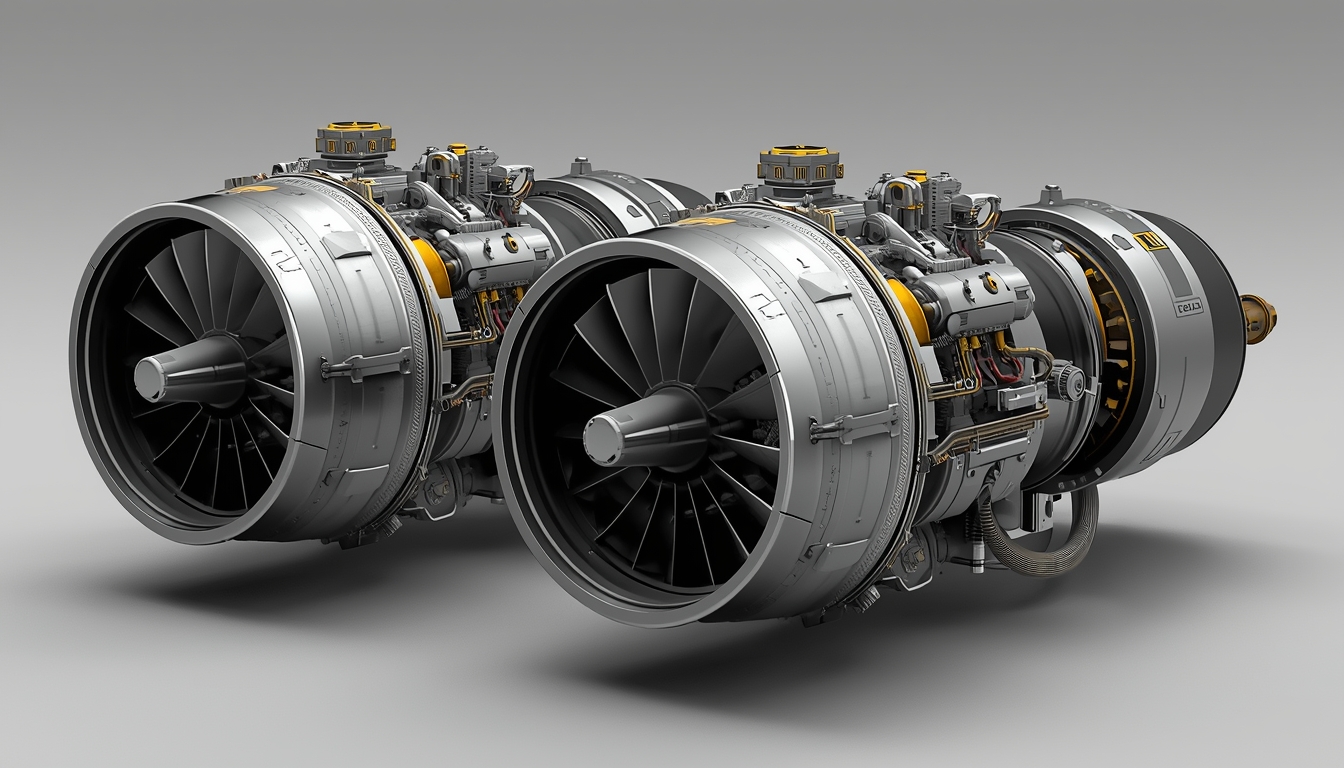
The global target drone market, valued at USD 4.69 billion in 2026 and projected to reach USD 8.62 billion by 2034, represents a rapidly expanding segment of the defense industry driven by evolving aerial threats and modernization of military training infrastructure. At the heart of many advanced target drone systems lies a critical propulsion technology: the micro turbojet engine. These compact powerplants, typically delivering thrust ranges from 200N to 1,500N, enable target drones to accurately simulate cruise missiles, loitering munitions, and hostile aircraft in realistic training scenarios. As armed forces worldwide seek cost-effective alternatives to expending live ammunition against expensive manned aircraft, the development and deployment of expendable micro turbojets have emerged as both a compelling market opportunity and a complex engineering challenge.
The term “expendable” fundamentally reshapes traditional aerospace engineering priorities. Unlike engines designed for thousands of hours of operation and multiple maintenance cycles, expendable turbojets prioritize simplicity, reliability, and above all—affordability. This philosophical shift creates unique opportunities for innovative design approaches, advanced manufacturing techniques, and new market entrants, while simultaneously presenting formidable technical challenges related to performance optimization within severe cost constraints. Understanding this opportunity-challenge dynamic is essential for stakeholders across the defense supply chain, from prime contractors to specialized propulsion developers.
Market Opportunities: A Growing Defense Priority
Expanding Global Demand and Market Drivers
The target drone market’s robust 7.93% compound annual growth rate through 2034 reflects several converging factors that create substantial opportunities for micro turbojet manufacturers. Military segments dominate the market with 93.31% share, driven by the need for realistic threat simulation in an era of increasingly sophisticated aerial weapons. Modern air defense crews must train against supersonic cruise missiles, stealthy unmanned systems, and coordinated drone swarms—threats that traditional towed targets and subsonic drones cannot adequately represent.
North America leads global demand, accounting for 42.19% of market share in 2025, with the U.S. market alone projected to reach USD 1.8 billion by 2026[1]. The U.S. Navy’s expanded use of the BQM-177A target drone and similar programs demonstrate sustained institutional commitment to jet-powered expendable targets. European markets are accelerating rapidly following the Russia-Ukraine conflict, with NATO members expanding training programs to address heightened security concerns. The U.K.’s procurement of additional Banshee Jet 80+ target drones exemplifies this trend.
Emerging opportunities exist in the lightweight category, where drones under 25kg dominate with 46.45% market share due to their cost-effectiveness and deployment simplicity. This segment creates specific opportunities for ultra-compact micro turbojets in the 200-500N thrust class, suitable for high-volume gunnery training and short-range missile exercises. The relatively lower manufacturing costs and faster deployment cycles enable armed forces to conduct realistic training at scale without prohibitive operational expenses.
Indigenous Development and Strategic Autonomy
National defense priorities are increasingly driving indigenous micro turbojet development programs, creating opportunities for domestic manufacturers to capture market share previously dominated by foreign suppliers. India’s partnership between Larsen & Toubro (L&T) and Green Aero represents a strategic initiative to develop domestic micro turbojet capabilities, reducing import dependency and establishing local supply chains. Such partnerships leverage established engineering capabilities with specialized aerospace R&D to accelerate technology transfer and manufacturing scale-up.
The strategic autonomy rationale extends beyond immediate cost savings. Domestic production secures supply chains against geopolitical disruptions, enables export opportunities to allied nations, and develops critical aerospace competencies that can be leveraged across broader defense and commercial applications. For developing aerospace nations, expendable micro turbojets represent a more accessible entry point than large commercial engines, requiring lower capital investment while building foundational turbomachinery expertise.
Technology Integration and Advanced Capabilities
Modern target drones are evolving beyond simple speed-altitude profiles toward sophisticated threat emulation incorporating radar cross-section enhancement, infrared signature simulation, and autonomous maneuvering. This evolution creates opportunities for micro turbojet manufacturers to integrate complementary technologies—electrical power generation for onboard systems, vectored thrust for enhanced agility, and adaptive control for variable flight profiles. The PBS TJ80 and TJ100 series engines, featuring integrated 750W generators and compact designs, exemplify this integration trend.
The convergence with autonomous and AI-driven control systems presents additional opportunities. As target drones incorporate more sophisticated mission planning and adaptive behaviors, propulsion systems must provide responsive throttle control, precise thrust modulation, and seamless integration with flight management systems. Manufacturers that can deliver “smart” propulsion packages—combining engine hardware with advanced control algorithms and health monitoring—position themselves favorably against competitors offering commoditized hardware alone.
Technical Challenges: Engineering for Expendability
Performance-Cost Trade-offs and Design Philosophy
The fundamental challenge in expendable turbojet development lies in achieving acceptable performance within stringent cost constraints that may be one-tenth those of conventional aerospace engines. The design philosophy for expendable engines—”simple, reliable, and cheap are higher demands than performance”—represents a radical departure from traditional turbomachinery development. This paradigm shift affects every aspect of the design process, from material selection to manufacturing tolerances to testing protocols.
Achieving thrust-to-weight ratios competitive with conventional small turbojets while maintaining expendable cost targets demands innovative approaches. Chinese manufacturers have demonstrated ceramic matrix composite (CMC) turbine disks achieving instantaneous thrust of 25daN (250N) with turbine inlet temperatures reaching 1,400K, enabling substantial performance gains while controlling costs through reduced cooling requirements. However, CMC manufacturing at scale remains challenging, particularly for high-volume expendable applications where per-unit cost dominates design decisions.
The performance envelope must satisfy diverse mission requirements—cruise speeds of 400-500 km/h for realistic threat simulation, altitude capabilities to 3,000-4,000 meters, and endurance of 60+ minutes for extended training scenarios. Meeting these specifications with simplified single-shaft configurations, reduced component counts, and relaxed manufacturing tolerances requires careful optimization of thermodynamic cycles and component efficiencies. As one technical analysis notes, the low working efficiency of components and short service life remain primary constraints on domestic micro turbojet performance.
Manufacturing Challenges and Production Economics
Traditional aerospace manufacturing processes—precision casting, multi-axis CNC machining, and extensive quality assurance—deliver superb performance but generate cost structures incompatible with expendable applications. Achieving economically viable production requires manufacturing innovations that dramatically reduce per-unit costs without compromising reliability. Recent research demonstrates that additive manufacturing (3D printing) can reduce production lead times by up to 45% for expendable engines while unlocking significant cost savings as capabilities mature.
However, additive manufacturing introduces its own challenges. Material properties of 3D-printed components, particularly for hot-section applications experiencing extreme thermal and mechanical loads, require extensive validation. The iterative design-print-test cycle, while faster than traditional approaches, demands robust simulation capabilities to minimize physical prototype iterations. One development program successfully utilized SolidWorks modeling and fluid simulation to optimize designs before 3D resin printing for structural validation, followed by selective metal printing combined with traditional machining for final production.
Manufacturing Approach | Cost Impact | Lead Time Reduction |
Traditional aerospace casting/machining | Baseline | Baseline |
Hybrid AM + traditional machining | -20-30% | -25-35% |
Advanced AM with optimized design | -30-40% | -35-45% |
High-volume automated production | -40-50%+ | -45%+ |
Table 1: Manufacturing strategy impact on expendable engine economics
Scaling from prototype to production volumes introduces additional challenges. Low-volume defense production typically cannot leverage economies of scale available to commercial engine manufacturers producing thousands of units annually. Establishing efficient supply chains for specialized materials—nickel-based superalloys, ceramic matrix composites, precision bearings—while maintaining cost discipline requires careful supplier development and vertical integration decisions. The make-versus-buy calculus for expendable engines differs fundamentally from reusable powerplants, favoring in-house production of high-value components and standardized sourcing of commodity items.
Reliability Requirements and Testing Validation
The expendable designation might suggest relaxed reliability requirements, but operational reality demands extremely high first-run success rates. A target drone failing mid-mission wastes training resources, disrupts exercise schedules, and potentially creates hazards if the vehicle crashes in uncontrolled airspace. Unlike commercial engines that accumulate operating hours gradually with opportunities for inspection and maintenance, expendable turbojets must achieve total operating life reliability—typically 25-60 hours—with zero maintenance interventions.
This requirement drives specific design challenges around critical failure modes. Bearing systems must survive entire mission profiles without lubrication replenishment. Combustor ignition and flame stability must function reliably across altitude and temperature ranges without sophisticated fuel control systems. Turbine blade attachment and disk integrity must be assured despite simplified manufacturing processes and reduced inspection opportunities. As research indicates, poor reliability alongside low thrust-to-weight ratios represents primary shortcomings of current domestic products.
Scaling Challenges and Thermodynamic Constraints
Miniaturization introduces fundamental physics challenges that become increasingly severe below certain size thresholds. Heat loss to surroundings grows disproportionately as engine size decreases, since surface area scales with the square of characteristic dimension while volume scales with the cube. This adverse scaling degrades thermodynamic cycle efficiency, requiring higher turbine inlet temperatures to maintain acceptable specific fuel consumption—which in turn demands more expensive materials and manufacturing processes.
Mechanical tolerances present another scaling challenge. Clearances between rotating and stationary components—blade tip gaps, seal interfaces, bearing fits—cannot be reduced proportionally with engine size. At small scales, these clearances represent larger percentages of component dimensions, increasing leakage losses and reducing efficiency. Achieving tight tolerances on small components also increases manufacturing difficulty and cost, particularly when working with difficult-to-machine superalloys and ceramics.
The Reynolds number effects at small scales affect aerodynamic component performance. Compressor and turbine stages operating at lower Reynolds numbers experience increased viscous losses and reduced efficiency compared to geometrically similar larger components. Computational fluid dynamics must account for these scaling effects during design optimization, and experimental validation becomes more challenging with miniaturized instrumentation.
Strategic Considerations and Future Outlook
Balancing Capability Requirements with Cost Discipline
Successful micro turbojet programs for expendable applications require rigorous requirements discipline—resisting the natural tendency to incorporate performance enhancements that compromise cost targets. The temptation to add “just one more” feature—improved fuel efficiency, extended operating envelope, enhanced diagnostic capabilities—can rapidly erode the fundamental expendability value proposition. Program managers must maintain clear-eyed focus on minimum acceptable performance thresholds while ruthlessly eliminating nice-to-have capabilities that inflate unit costs.
This discipline extends to testing and qualification protocols. While aerospace tradition demands exhaustive validation across every conceivable operating condition, expendable engines benefit from risk-appropriate qualification approaches. Focusing validation efforts on mission-critical scenarios—typical target profiles, common environmental conditions, expected handling and storage—while accepting limited margins in edge cases can significantly reduce development costs and accelerate fielding timelines.
Technology Roadmap and Capability Evolution
The micro turbojet landscape for expendable applications will likely evolve along several parallel trajectories. Material innovations—particularly advanced CMCs and high-temperature polymer composites—promise performance gains without proportional cost increases as manufacturing processes mature. Control system sophistication will grow, leveraging commercial automotive and industrial control hardware to deliver aerospace-grade functionality at consumer-grade prices.
Manufacturing technology represents perhaps the highest-leverage evolution pathway. As additive manufacturing capabilities advance—improved material properties, larger build volumes, faster deposition rates, integrated multi-material printing—the economic case for AM-centric production strengthens. Digital thread integration connecting design optimization, manufacturing planning, and quality assurance can dramatically reduce development cycles while improving first-article success rates.
Modular architecture approaches may emerge, enabling common core engines to be configured for diverse applications through interchangeable accessories, inlet configurations, and nozzle assemblies. This commonality reduces per-unit costs through volume leverage while maintaining application-specific performance optimization. Industry consolidation may accelerate this trend as larger players acquire specialized capabilities and integrate them into comprehensive product portfolios.
Conclusion
Micro turbojets for expendable target applications occupy a unique niche within the aerospace propulsion landscape—bridging sophisticated turbomachinery engineering with consumer-electronics economics. The market opportunities are substantial and growing, driven by military modernization, geopolitical tensions, and the relentless evolution of aerial threats requiring ever-more-realistic training scenarios. The global target drone market’s trajectory toward USD 8.62 billion by 2034 creates a clear commercial imperative for capable, cost-effective micro turbojet solutions.
Yet realizing this opportunity demands confronting formidable technical challenges: achieving acceptable performance within severe cost constraints, manufacturing at scale with novel processes, ensuring reliability without traditional maintenance safety nets, and overcoming fundamental physics constraints of miniaturization. Success requires abandoning traditional aerospace development paradigms in favor of expendability-optimized approaches that prioritize simplicity, manufacturability, and first-run reliability above ultimate performance.
For established aerospace firms, the expendable micro turbojet market represents both opportunity and threat—an opportunity to leverage core competencies into growing segments, but a threat from nimble entrants unencumbered by legacy cost structures and traditional design thinking. For emerging players, particularly in developing aerospace nations, these engines offer an accessible entry point to turbomachinery capabilities with clear dual-use potential across defense and commercial applications. The next decade will likely see intensifying competition, accelerating innovation, and expanding global participation in this critical capability area—ultimately benefiting armed forces worldwide seeking affordable, effective training solutions for an increasingly complex threat environment.