Dheya Engineering Technologies PVT LTD

Dheya Engineering Technologies PVT LTD
CTO, Dheya Engineering Technologies Private limited

Introduction
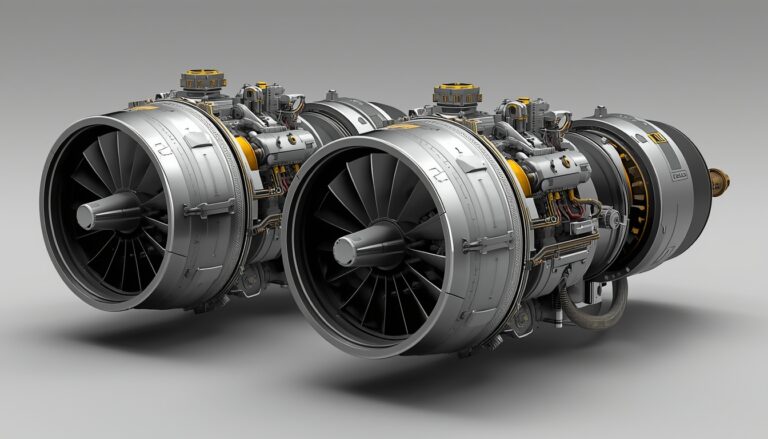
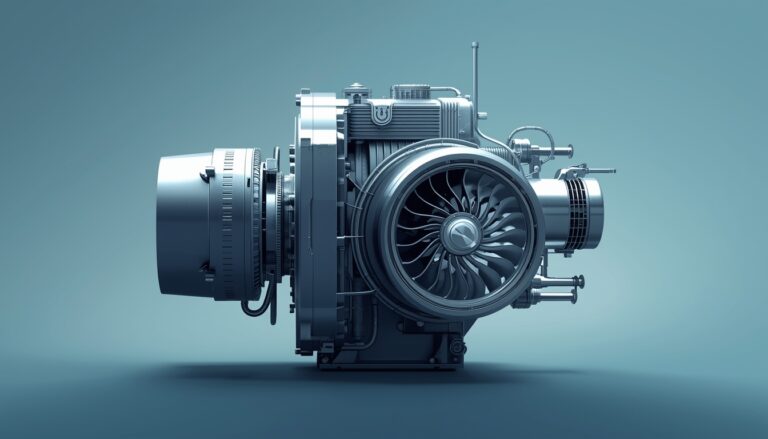
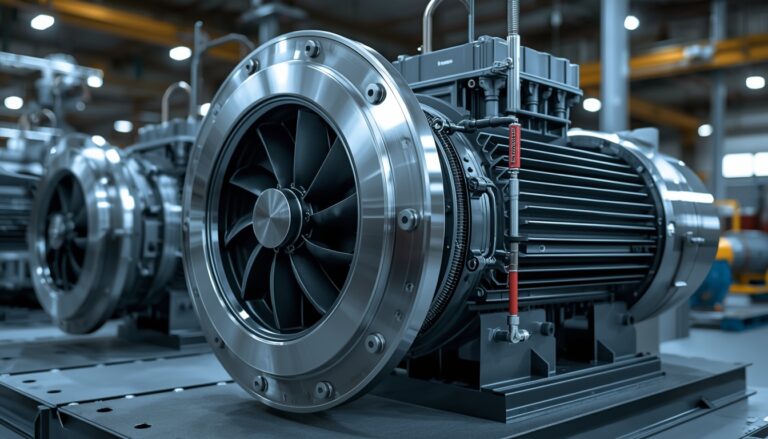
High-speed compact turbomachinery—encompassing microturbines, turbochargers, cryogenic turbopumps, turboexpanders, and miniaturized power generation systems—operates under extreme conditions that challenge conventional Rotordynamics design principles. These machines routinely achieve rotational speeds ranging from 100,000 to over 240,000 rpm, with cutting-edge MEMS-scale devices reaching 1.7 million rpm. At such velocities, rotor tip speeds approach transonic conditions, centrifugal stresses reach material limits, and dynamic phenomena that remain benign in larger, slower machinery become critical failure mechanisms requiring sophisticated analysis and mitigation strategies.
The trend toward compact, high-power-density turbomachinery across aerospace, industrial, and emerging energy applications intensifies rotordynamic challenges. Miniaturization imposes adverse scaling effects: bearing stiffness-to-rotor-mass ratios deteriorate, clearances become proportionally larger relative to component dimensions, thermal gradients steepen, and manufacturing tolerances tighten. Simultaneously, operational demands escalate—higher pressure ratios, elevated temperatures, extended operating envelopes—while reliability expectations remain uncompromising. Understanding and addressing the constellation of rotordynamic challenges inherent to these demanding applications represents a critical frontier in turbomachinery development, directly impacting performance, durability, and commercial viability.
Critical Speed Management and Resonance Avoidance
Fundamental Critical Speed Considerations
Critical speeds—rotational velocities at which rotor natural frequencies coincide with operating frequencies, producing mechanical resonance—represent perhaps the most fundamental rotordynamic design constraint for high-speed machinery. Traditional design philosophy advocates placing critical speeds at least 15-20% away from the operating speed range to avoid sustained resonant operation that amplifies vibrations and accelerates fatigue damage. However, compact high-speed turbomachinery frequently operates above the first, and sometimes second, bending critical speeds due to the practical impossibility of elevating critical speeds sufficiently through stiffness modifications alone.
A representative turboexpander rotor designed for 240,000 rpm operation exhibits first and second critical speeds at approximately 60,000 rpm and 120,000 rpm respectively—well within the startup transient pass-through envelope. This necessitates “supercritical” rotor design where the machine routinely operates above one or more critical speeds, relying on adequate bearing damping and controlled acceleration through resonant zones to limit vibration amplitudes. The challenge intensifies in compact machines where rotor flexibility increases relative to bearing stiffness, creating lower critical speeds and narrower separation margins between successive modes.
The relationship between bearing support stiffness and critical speed placement reveals complex design trade-offs. Increasing bearing stiffness elevates second and higher critical speeds but may inadvertently lower the first critical speed or reduce separation between modes, potentially worsening vibration response. For rolling element bearings commonly employed in compact turbomachinery, relatively flexible mounting structures introduce additional compliance that must be modeled accurately—neglecting foundation flexibility can underpredict resonance amplitudes by factors of 10×, leading to catastrophic design errors. Proper critical speed management demands coupled rotor-bearing-foundation analysis incorporating all significant compliance sources and validation through modal testing.
Campbell Diagrams and Mode Shape Analysis
Campbell diagrams—plotting natural frequencies versus rotational speed and identifying intersections between operating speed lines and natural frequency curves—provide essential visualization tools for critical speed identification and resonance risk assessment. For high-speed compact rotors, these diagrams reveal not only the primary bending modes but also complex coupled torsional-lateral modes, whirl instabilities, and parametric excitation phenomena that can produce subharmonic and super harmonic resonances at fractional or multiple operating speeds.
Mode shape analysis accompanying critical speed prediction identifies nodal patterns and maximum deflection locations, informing bearing placement optimization, disk positioning, and structural reinforcement strategies. In compact turbomachinery with closely spaced impellers and limited axial length, achieving favorable mode shapes that minimize bearing loads and avoid excessive disk deflections becomes particularly challenging. The first bending mode typically exhibits a single antinode, while second and higher modes introduce multiple antinodes that can produce localized stress concentrations requiring detailed finite element analysis for fatigue assessment.
Damping Deficiency and Instability Mechanisms
Inadequate Damping in Compact Systems
Damping—the mechanism dissipating vibrational energy and controlling resonant amplitude—proves critically deficient in many high-speed compact turbomachinery designs. Rolling element bearings, favored for their compact size, high stiffness, and speed capability, provide minimal inherent damping. Measured damping ratios in rolling element bearing systems typically range from 0.5-2%, compared to 10-30% achievable with properly designed fluid film bearings. This damping deficiency renders compact machines highly susceptible to resonance amplification, requiring conservative critical speed separation margins and potentially limiting achievable power density.
The situation worsens at elevated speeds where aerodynamic cross-coupling forces generated by impeller-shroud interactions, labyrinth seals, and volute asymmetries introduce destabilizing influences that can overcome available damping and trigger self-excited instabilities. These rotor instabilities—characterized by sub synchronous vibrations at natural frequencies independent of external forcing—can produce vibration amplitudes orders of magnitude larger than those from residual imbalance, leading to bearing failure, seal rubs, and catastrophic rotor failure.
Gas foil bearings, increasingly employed in oil-free compact turbomachinery applications, offer improved damping through Coulomb friction mechanisms at foil interfaces but introduce nonlinear amplitude-dependent characteristics complicating dynamic prediction. The damping effectiveness depends on bearing preload, compliance structure design, operating temperature, and wear condition—parameters subject to manufacturing variability and operational degradation. Achieving reliably adequate damping across all operating conditions and throughout machine life remains an active research challenge requiring careful bearing specification, validation testing, and often incorporation of supplementary damping elements such as squeeze film dampers or viscoelastic supports.
Internal Damping Instability
An insidious instability mechanism particularly relevant to high-speed compact rotors operating super critically involves internal material damping and joint friction within the rotor structure itself. Counterintuitively, internal damping—generally considered beneficial for vibration suppression—becomes destabilizing for rotors operating above the first bending critical speed. This paradoxical behavior arises because internal damping forces act in phase with rotor deflection velocity in the rotating reference frame, producing negative work per cycle that extracts energy from external damping mechanisms.
Experimental investigations on representative high-speed turbomachinery rotors with splined joints and interference fit connections demonstrate severe sub synchronous instabilities at frequencies corresponding to the first natural frequency when operated super critically. Testing of rotors with axial spline joints under 5,000 in-lb torque revealed “extremely severe instability” in the supercritical regime, validating nonlinear time-transient predictions. The coefficient of friction at material interfaces—approximately 0.2 for lubricated and 0.8 for unlubricated conditions—directly influences stability thresholds, emphasizing the importance of joint design and assembly procedures in compact machinery where multiple splined and bolted joints are common.
Mitigation strategies include minimizing the number of structural joints, employing welded or brazed assemblies where feasible, providing supplementary external damping to overwhelm destabilizing internal sources, and in some cases, operating at carefully selected speeds that avoid coincidence between critical speeds and destabilizing force frequencies. The complexity of predicting internal damping instability requires sophisticated nonlinear rotordynamic analysis tools incorporating realistic joint models validated against component-level friction and damping measurements.
Aerodynamic Force Effects and Cross-Coupling
Radial Aerodynamic Forces in Compact Geometries
Compact turbomachinery geometries with tight impeller-to-housing clearances and asymmetric volute configurations generate substantial time-averaged and fluctuating radial aerodynamic forces that profoundly influence rotordynamic behavior. Computational fluid dynamics studies on representative automotive turbochargers reveal radial forces from compressor and turbine volute pressure asymmetries reaching hundreds of newtons—comparable in magnitude to rotor weight and significantly affecting bearing loads and shaft equilibrium positions.
These aerodynamic forces exhibit strong dependence on operating conditions: compressor delivery pressure, turbine inlet temperature, mass flow rate, and rotational speed. At off-design conditions, particularly during transient acceleration and deceleration, force magnitudes and directions can change rapidly, producing time-varying excitation that couples with rotor dynamics. For floating ring bearing systems common in turbochargers, radial aerodynamic forces alter lubricant film characteristics, shifting journal equilibrium positions and modifying dynamic stiffness and damping coefficients in a nonlinear, speed-dependent manner.
The volute tongue—the circumferential location where the scroll begins—creates a periodic pressure disturbance as impeller blades pass, producing blade-passing-frequency excitation. In compact machines with minimal blade-tongue clearances dictated by packaging constraints, this excitation can be substantial. When blade passing frequency coincides with rotor natural frequencies—a condition that may occur at specific operating speeds—resonant amplification produces excessive vibration affecting bearing life, seal integrity, and passenger comfort in automotive applications. Careful aerodynamic design balancing performance efficiency against rotordynamic stability considerations becomes essential.
Destabilizing Cross-Coupled Stiffness
Aerodynamic cross-coupling—tangential forces arising from rotor radial displacement or velocity—introduces asymmetric stiffness and damping matrices that can destabilize rotor-bearing systems even when direct stiffness terms are positive. Labyrinth seals, impeller shroud cavities, and partial admission stages in turbines generate pressure distributions that couple lateral and circumferential motion, producing forces perpendicular to the displacement direction (cross-coupled stiffness) and perpendicular to velocity direction (cross-coupled damping).
Cross-coupled stiffness acts analogously to negative direct damping, extracting energy from the rotor system and potentially triggering forward whirl instabilities. The destabilizing effect scales with rotational speed and differential pressure across sealing elements—both parameters maximized in high-speed compact turbomachinery pursuing maximum power density. Stability analysis must incorporate these aerodynamic effects through coupling of CFD predictions with structural dynamics models or through semi-empirical models based on seal geometry and operating conditions.
Mitigation approaches include: employing honeycomb or damper seals instead of conventional labyrinth configurations to enhance direct damping while reducing cross-coupling; optimizing seal clearances balancing leakage losses against stability margins; implementing swirl brakes upstream of sealing elements to reduce tangential velocity components; and in critical applications, active magnetic bearing control systems that can counteract destabilizing forces in real-time through closed-loop feedback.
Thermal Effects and Thermally-Induced Instabilities
Thermal Gradients and Rotor Growth
High-speed compact turbomachinery frequently operates across extreme temperature gradients—cryogenic fluid handling in turbopumps, hot-section bearings in gas turbines, or rapid thermal transients during startup and shutdown cycles. These thermal environments produce differential expansion of rotor and stator components, altering clearances, changing bearing preloads, and modifying rotor dynamic characteristics. In extreme cases, thermal gradients induce thermoelastic instabilities where temperature-displacement-stress coupling produces self-excited vibrations independent of external forcing.
Axial thermal gradients along the rotor shaft create differential expansion that can bow the shaft, introducing geometric misalignment equivalent to mass unbalance. Radial thermal gradients produce asymmetric expansion, effectively creating “thermal unbalance” even in a perfectly balanced rotor. For bearing systems, thermal expansion affects preload in angular contact bearings or clearances in journal bearings, shifting critical speeds and altering damping characteristics. In compact machines with limited thermal mass and tight clearances, these effects manifest rapidly and can significantly affect startup dynamics and steady-state operation.
Advanced thermal management strategies—active cooling channels, thermal barriers, material selection optimizing thermal expansion coefficients—address these challenges but add complexity and cost. Predictive models coupling heat transfer, thermal expansion, and Rotordynamics enable design optimization but require validation against instrumented hardware experiencing realistic thermal environments. For applications with frequent thermal cycling, fatigue assessment must account for thermal stress superposition with mechanical stresses from rotation and vibration.
Thermoelastic Instability in Bearings
Thermoelastic instability (TEI) represents a critical failure mechanism in high-speed bearings where thermal expansion reduces film thickness, increasing viscous dissipation, further elevating temperatures in a positive feedback loop potentially culminating in seizure. Recent research on air foil bearings demonstrates TEI threshold speeds varying with cooling effectiveness—introducing passive cooling fins increases TEI onset speed, providing additional stability margin. However, the forced cooling airflows create their own axial temperature gradients that alter bearing geometry and potentially affect overall rotor dynamics.
For rolling element bearings in compact turbomachinery, thermal effects manifest differently but remain critical. Inadequate lubrication film thickness at high speeds generates bearing element heating that expands races and alters internal clearances. Excessive heating degrades lubricant properties, accelerating wear and potentially triggering bearing failure cascades. Thermal modeling of bearing systems incorporating lubricant flow, heat generation, and heat transfer pathways becomes essential for reliable performance prediction, particularly for oil-free systems where conventional cooling mechanisms are unavailable.
Balancing Challenges and Residual Unbalance
Flexible Rotor Balancing Complexity
Balancing high-speed compact rotors operating super critically requires sophisticated flexible rotor techniques accounting for mode shape deformation at operating speeds. Unlike rigid body balancing adequate for subcritical rotors, flexible rotor balancing must address modal unbalance—mass eccentricity distribution that excites specific bending modes. The process typically employs modal balancing or influence coefficient methods, requiring the rotor to be balanced at multiple speeds including operation near or at critical speeds where vibration amplification facilitates sensitivity to correction weight placement.
The number of balancing planes required increases with the number of modes traversed during operation. A rotor operating above the second critical speed theoretically requires at least three balancing planes to address the first two flexible modes plus rigid body unbalance. In compact turbomachinery with limited axial length and closely spaced components, identifying suitable balancing plane locations and implementing correction weight adjustments becomes geometrically constrained. Material removal through drilling or milling represents the most common correction method, but access limitations and structural constraints may preclude corrections at optimal locations.
Thermal asymmetry and material property variations introduce additional complexity. Manufacturing processes—casting, forging, welding—create material inhomogeneities that shift principal inertia axes relative to geometric axes. During high-speed operation, centrifugal forces amplify these asymmetries, effectively creating speed-dependent unbalance that cannot be fully corrected through static or low-speed balancing procedures. Achieving acceptable balance quality (typically API Standard 612 Grade 2.5 or better for precision machinery) demands careful manufacturing process control, precision measurement, and iterative balancing at operational speeds.
Residual Unbalance Tolerance and Vibration Limits
Even after careful balancing, residual unbalance remains—a consequence of measurement uncertainty, correction weight resolution, and practical limitations on achievable balance quality. For high-speed compact rotors, residual unbalance produces synchronous vibration that must remain within acceptable limits throughout the operating envelope. API standards specify maximum allowable vibration levels based on rotor size, speed, and application criticality, typically expressed as velocity amplitudes (mm/s peak) or displacement amplitudes (μm peak-to-peak) measured at bearing housings.
The relationship between residual unbalance and vibration amplitude depends critically on proximity to critical speeds, available damping, and bearing dynamic characteristics. Operating near (within ±15% of) critical speeds produces amplification factors potentially exceeding 10×, transforming acceptable residual unbalance into intolerable vibration. This consideration drives critical speed placement requirements and influences acceptable operating speed ranges for field operation. For variable-speed machinery, control systems must either limit operation in resonance zones or implement active balancing or vibration suppression technologies.
Balancing tolerance allocation in multi-rotor systems (e.g., turbocharger with separate compressor and turbine rotors) requires systematic analysis considering how individual component unbalances combine and affect overall system response. Statistical approaches accounting for random phase relationships between component unbalances provide realistic worst-case scenarios for design validation. Manufacturing quality assurance protocols must enforce component-level balance specifications ensuring assembled system performance remains within acceptable limits.
Manufacturing and Assembly Precision Requirements
Geometric Tolerances and Clearance Control
Manufacturing precision directly determines rotordynamic performance in high-speed compact turbomachinery. Shaft runout—radial deviation from true rotation—introduces cyclic variation in bearing clearances equivalent to unbalance excitation. For bearings operating at 200,000+ rpm, shaft runout tolerances typically must remain below 5-10 μm total indicator reading (TIR) to avoid excessive vibration and bearing wear. Achieving such precision requires precision grinding operations, rigorous inspection protocols, and careful handling throughout manufacturing and assembly.
Bearing bore and housing concentricity similarly affect dynamic performance. Misalignment between bearing axes introduces moment loads that excite bending modes and produce non-uniform bearing load distributions accelerating wear. In compact assemblies with multiple bearings in close proximity, alignment tolerance stack-up becomes critical—individual component tolerances must be allocated ensuring assembled alignment remains within specifications. Precision fixture design, controlled interference fits, and assembly validation measurements (dial indicator runout checks, laser alignment) maintain geometric fidelity.
Clearance control in aerodynamic gaps—labyrinth seals, impeller shrouds, turbine blade tips—balances efficiency losses from excessive clearances against rub risks from inadequate margins. These clearances change during operation due to thermal expansion, centrifugal growth, and rotor deflection under aerodynamic loads. Predictive modeling must account for all these effects, typically requiring coupled thermal-structural-rotordynamic analysis. Safety factors applied to minimum clearances reflect uncertainty in predictions, manufacturing variability, and operational tolerance accumulation, but overly conservative margins sacrifice performance in competitive applications.
Assembly-Induced Preloads and Constraints
Assembly processes introduce preloads and constraints affecting rotor dynamics. Interference fits for impellers, couplings, and bearing races create radial compressive stresses that influence material fatigue resistance and can alter rotor stiffness distribution. Excessive interference produces stress concentrations potentially initiating cracks, while insufficient interference risks fretting corrosion or component slippage during operation. Temperature-controlled shrink fitting or hydraulic expansion tooling enables precise control, but process variation remains and must be accommodated in design analysis.
Bolt preload in flanged rotor joints affects joint stiffness and damping characteristics. Insufficient preload permits relative motion between mating surfaces, introducing friction damping but also potential fretting damage and fatigue crack initiation sites. Excessive preload risks thread stripping, bolt yielding, or distortion of mating surfaces. Controlled torque application, often supplemented with ultrasonic bolt elongation measurement, ensures consistent preload meeting design specifications. Dynamic bolt tension monitors in critical applications provide in-service verification maintaining joint integrity throughout operational life.
Future Directions and Emerging Technologies
Advanced Modeling and Digital Twin Technologies
The future of Rotordynamics in high-speed compact turbomachinery increasingly relies on sophisticated Multiphysics modeling integrating structural dynamics, fluid dynamics, heat transfer, and controls into unified digital twin frameworks. These virtual representations enable exploration of complex coupled phenomena—aero thermoelastic effects, bearing-seal-rotor interactions, control system influences—difficult or impossible to isolate experimentally. Calibrated against test data from instrumented hardware, digital twins provide predictive capabilities supporting design optimization, operational envelope expansion, and condition-based maintenance strategies.
Machine learning and artificial intelligence augment physics-based models, accelerating prediction through surrogate modeling and enabling real-time health monitoring through anomaly detection algorithms trained on operational data. Neural networks trained on coupled thermal-hydrodynamic-structural analyses of gas foil bearings predict dynamic coefficients across operating envelopes orders of magnitude faster than iterative finite element solutions, facilitating parametric optimization and uncertainty quantification. Data-driven approaches complement rather than replace first-principles modeling, providing hybrid frameworks leveraging strengths of both methodologies.
Active Control and Adaptive Systems
Active magnetic bearing (AMB) systems represent transformative technology for addressing rotordynamic challenges in demanding high-speed compact applications. By eliminating mechanical contact, AMBs eliminate bearing friction, enable operation at extreme temperatures and speeds, and provide controllable stiffness and damping characteristics adaptable in real-time. Advanced control algorithms suppress instabilities, compensate for cross-coupled forces, and enable operation through critical speeds with minimal vibration amplification. Integration challenges—electromagnetic compatibility, sensor placement, backup bearing systems for emergency landing—remain, but declining costs and improving reliability expand AMB applicability beyond traditional aerospace and research applications toward industrial and automotive domains.
Passive adaptive systems employing squeeze film dampers, shape memory alloys enabling variable stiffness, and magnetorheological fluids providing controllable damping characteristics offer intermediate solutions between fixed-parameter conventional systems and fully active AMB approaches. These technologies provide enhanced performance without the complexity and power requirements of active systems, potentially representing optimal solutions for cost-sensitive high-volume applications.
Conclusion
Rotordynamics challenges in high-speed compact turbomachinery—critical speed management, damping deficiency, aerodynamic force effects, thermal phenomena, and manufacturing precision requirements—demand sophisticated multidisciplinary approaches integrating mechanical design, fluid dynamics, controls, manufacturing, and testing. The operational severity of these machines, routinely operating super critically above multiple critical speeds while withstanding extreme temperatures and aerodynamic loads, pushes conventional rotordynamic analysis and design methods to their limits. Success requires comprehensive understanding of coupled physical phenomena, validated predictive modeling tools, precision manufacturing capabilities, and rigorous testing protocols.
The intensifying trend toward higher power density, wider operational envelopes, and oil-free operation amplifies these challenges while simultaneously driving innovation in bearing technologies, damping systems, materials, manufacturing processes, and modeling methodologies. Emerging technologies—digital twins incorporating Multiphysics simulation, machine learning for predictive analytics, active magnetic bearings enabling real-time adaptive control—promise to address limitations of current approaches while introducing their own implementation complexities.
For engineers developing the next generation of compact turbomachinery—from aircraft auxiliary power units to renewable energy systems, from cryogenic applications to extreme-temperature environments—mastering rotordynamic principles and skillfully applying advanced analysis tools represents not merely academic exercise but practical necessity. The reliability, performance, and commercial viability of these sophisticated machines depend fundamentally on addressing rotordynamic challenges through informed design, precision execution, and continuous validation. As applications demand ever-higher speeds, greater compactness, and enhanced reliability, the Rotordynamics discipline will continue evolving, developing new tools and techniques enabling machines that would have been deemed impossible by previous generations.

Lead Aerodynamics Engineer
An experienced engineer with expertise in turbomachinery, contributing to cutting-edge developments in
aerospace and turbomachinery.