Introduction
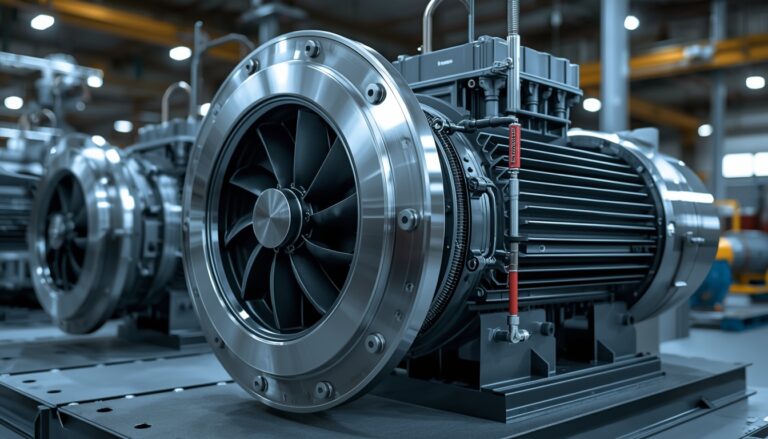
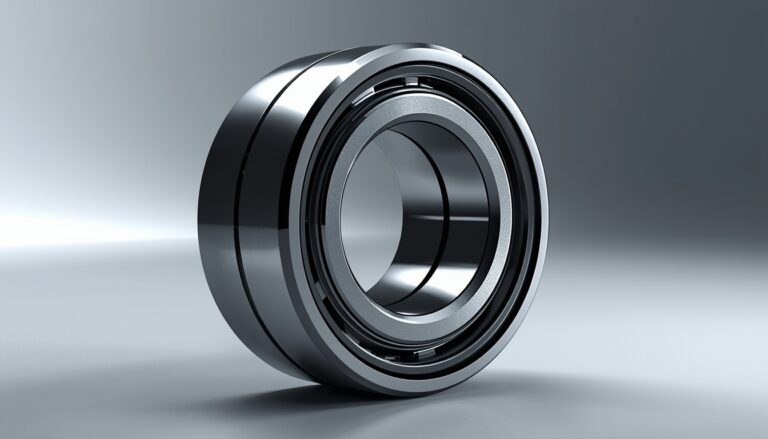
Air foil bearings, also known as gas foil bearings or compliant foil bearings, represent a transformative technology enabling oil-free operation of high-speed turbomachinery across diverse applications—from aircraft cabin pressurization systems to microturbine generators, cryogenic turbopumps, and turbochargers. These self-acting hydrodynamic bearings utilize ambient air or process gas as their lubricant, eliminating the complexity, maintenance burden, and contamination risks associated with oil-lubricated systems. During operation, shaft rotation drags fluid into the bearing clearance through viscous action, creating a pressurized lubricating film that separates compliant foil surfaces from the rotating shaft while supporting operational loads.
Despite their compelling advantages—maintenance-free operation, extreme temperature capability (cryogenic to 650°C+), high-speed capacity exceeding 100,000 rpm, and remarkable durability—air foil bearings face substantial technical challenges that have historically limited their adoption to lower-power applications, typically below 500 kW. The past two decades have witnessed intensive research and development efforts aimed at overcoming fundamental limitations related to load capacity, damping characteristics, thermal management, start-stop durability, and manufacturing complexity. As turbomachinery designers increasingly seek oil-free solutions for megawatt-class systems and harsh operating environments, understanding these development challenges becomes critical for advancing foil bearing technology toward broader commercial deployment.
Fundamental Design Challenges
Load Capacity and Stiffness Limitations
The most significant barrier preventing widespread adoption of air foil bearings in high-power turbomachinery is insufficient load-carrying capacity compared to conventional oil-lubricated or rolling element bearings. The load capacity challenge stems from fundamental physics: gas lubricants possess viscosities approximately 1,000 times lower than oil, generating proportionally thinner lubricating films and lower hydrodynamic pressures. While compliant foil structures partially compensate by conforming to shaft deflections and distributing loads more uniformly, achieving adequate stiffness for megawatt-class applications remains problematic.
Recent numerical investigations on gas foil journal bearings designed for cryogenic LH₂ turbopump applications (50.8 mm diameter, 38,000 rpm, 2,000 N radial load) reveal the complex interplay between bearing parameters and load capacity. Parametric studies demonstrate that stiffness increases with bearing number (dimensionless speed-load parameter) but decreases with increased bearing compliance—creating an inherent design trade-off between conformability and structural rigidity. Further complicating matters, stiffness coefficients increase while damping coefficients decrease at higher speeds, requiring careful optimization to maintain adequate dynamic performance across the operational envelope.
Advanced foil bearing designs have incorporated several innovations to enhance load capacity. Generation III bearings developed for oil-free turbochargers employ optimized foil geometries, improved preload strategies, and refined compliant structures that significantly outperform earlier designs. Modular thrust bearing architectures facilitate parametric evaluation of various configurations without extensive redesign, enabling rapid design iterations. However, extending these improvements from sub-500 kW applications to multi-megawatt turbomachinery requires substantial additional development to achieve the 5-10× load capacity increases necessary for competitive performance.
Damping and Dynamic Stability
Adequate damping represents the second critical hurdle for foil bearing technology penetration into high-power applications. Damping in foil bearings arises primarily from Coulomb (dry friction) mechanisms at interfaces between compliant foils and backing structures, supplemented by hydrodynamic effects in the gas film. While this combination provides reasonable damping for small-to-medium machines, the nonlinear and amplitude-dependent nature of friction damping complicates dynamic analysis and creates challenges for rotordynamic prediction and stability assurance.
The nonlinear coupling between rotor dynamics, gas film hydrodynamics, and compliant foil structure deflections makes the dynamic response of foil-bearing-rotor systems particularly challenging to model accurately. Conventional linear rotordynamic analysis tools employed for oil-lubricated systems prove inadequate for capturing the complex behaviors exhibited by foil bearing systems, including sub synchronous instabilities, nonlinear stiffness characteristics, and amplitude-dependent damping. Developing reliable predictive tools capable of simulating these coupled nonlinear phenomena across diverse operating conditions remains an active research area requiring both sophisticated computational methods and extensive experimental validation.
Dynamic instability phenomena, such as sub synchronous vibration and limit cycle oscillations, can occur when insufficient damping fails to control rotor motions near critical speeds or under destabilizing cross-coupled forces. While properly designed foil bearings demonstrate excellent stability characteristics in proven applications like air cycle machines, scaling to larger power levels with higher loads and different operating conditions introduces uncertainty about dynamic behavior. The need for application-specific testing using realistic simulators that duplicate actual equipment operating conditions has been repeatedly emphasized to validate foil bearing performance before full-scale deployment.
Thermal Management and High-Temperature Operation
Heat Generation and Thermal Gradients
Thermal management constitutes a particularly vexing challenge for air foil bearings, especially in high-temperature turbomachinery applications such as gas turbine auxiliary power units, microturbines, and hot-section bearings. Viscous shearing in the gas film generates significant heat, particularly at high speeds and moderate-to-heavy loads. Unlike oil-lubricated bearings where continuous oil circulation removes heat, foil bearings rely primarily on conduction through bearing structures and convection to surrounding gas environments for thermal management.
High-speed operation creates substantial thermal gradients within the bearing system, with temperatures concentrated in the load-bearing zones where film thickness is minimal and shear rates are maximized. Research demonstrates that increasing rotational speed from 20,000 rpm to 30,000 rpm and 40,000 rpm elevates maximum viscous dissipation by 67.4% and 179.4% respectively, driving proportional temperature increases. Large axial and circumferential temperature gradients can induce thermoelastic deformation of bearing components, altering the lubrication gap geometry and potentially degrading performance or triggering thermoelastic instability (TEI).
Thermoelastic instability represents a critical failure mode where thermal expansion reduces film thickness, increasing viscous heat generation, which further elevates temperatures in a positive feedback loop potentially leading to bearing seizure. Recent research has introduced innovative passive cooling strategies, including adding fins to hollow journal cylinder surfaces to enhance convective heat transfer. These affordable modifications increase the threshold speed for TEI onset, providing designers with additional margin against thermal failure. Active thermal management approaches using thermoelectric Peltier modules to control axial temperature gradients have demonstrated effectiveness in experimental studies, though added complexity and power requirements limit applicability.
Cooling Strategies and Thermal Design
Conventional thermal management for foil bearings employs forced cooling air streams flowing axially through corrugated bump foil structures, providing convective heat removal through integrated heat exchange channels. While effective for moderate-temperature applications, this approach introduces secondary complications: forced cooling creates axial temperature gradients that alter bearing geometry, potentially affecting dynamic behavior and rotordynamic characteristics of the overall system. Balancing adequate cooling against undesirable thermal distortion requires careful thermal-structural analysis and empirical validation.
High-temperature applications above 400-500°C demand specialized material solutions and thermal design considerations. Nickel-based superalloys like Inconel provide adequate structural strength and oxidation resistance at elevated temperatures but complicate manufacturing through reduced machinability and higher costs. Ceramic coatings applied to bearing surfaces offer enhanced temperature capability and tribological performance but require careful selection, application processes, and validation to ensure durability under combined thermal, mechanical, and tribological loading. The integration of temperature measurement instrumentation—typically thermocouples embedded in or near top foils—adds complexity while providing critical data for thermal validation and health monitoring.
Start-Stop Durability and Wear Challenges
Contact Mechanics During Transient Operation
One of the most significant practical challenges limiting foil bearing adoption is wear during start-up and shutdown transients when hydrodynamic films have not yet formed or have collapsed. Unlike operation at steady-state speed where a robust gas film completely separates foil and shaft surfaces, low-speed conditions result in boundary contact with direct sliding between mating surfaces. The resulting friction generates the characteristic high start-up torque associated with foil bearings while producing surface wear that accumulates over repeated start-stop cycles, potentially limiting operational life.
The severity of start-stop wear depends on numerous factors: contact pressures determined by bearing preload and rotor weight, sliding velocities during run-up and coast-down, surface roughness and material properties of contacting surfaces, environmental conditions (temperature, humidity, contamination), and the effectiveness of protective coatings. For applications involving frequent starts—such as ground-based power generation equipment—achieving acceptable start-stop durability becomes paramount and may represent the limiting factor in bearing life rather than steady-state operational considerations.
Manufacturing variability in foil flatness, bump stiffness uniformity, and assembly preload significantly influences contact pressure distribution during start-stop events. Non-uniform contact creates localized high-stress regions where accelerated wear occurs, potentially leading to premature failure despite overall bearing loads remaining within design limits. Achieving consistent manufacturing quality and assembly precision across production volumes represents an ongoing challenge requiring process control discipline uncommon in traditional bearing manufacturing.
Coating Development and Tribological Optimization
Advanced solid lubricant coatings applied to foil bearing top surfaces provide the primary defense against start-stop wear, enabling the 150,000+ start-stop cycles achieved by state-of-the-art designs. Coating selection must balance multiple, often conflicting requirements: low friction coefficient during boundary contact, adequate wear resistance for extended cycle life, chemical and thermal stability across the operating temperature range, strong adhesion to substrate materials, and compatibility with mating journal surface treatments.
Extensive experimental research has evaluated numerous coating systems for foil bearing applications across different temperature regimes. Low-temperature coatings based on polytetrafluoroethylene (PTFE/Teflon) demonstrate excellent friction characteristics up to approximately 230°C but degrade rapidly at higher temperatures. Polymer-based Korolon™ 700 and 800 series coatings extend temperature capability to 400-500°C while maintaining low friction, though performance degrades beyond these limits. High-temperature applications require advanced ceramic-based coatings such as Korolon™ 1350 series (nickel-chromium matrix), TiAlN, chromium oxide, or WC/C composites.
Recent experimental studies comparing various coating materials under realistic loading conditions reveal significant performance differences. TiAlN and AS20 coatings demonstrated good durability with minimal wear after extensive testing, remaining suitable for continued operation. Conversely, WC/C coatings exhibited substantial damage when paired with chromium oxide journal surfaces, proving unsuitable for that material combination. MoS₂/C coatings showed extensive wear and complete erosion in multiple areas, indicating inadequate durability. Dual-layer approaches combining TiAlN base layers with MoS₂/C overcoats showed promise, with the sacrificial outer layer protecting the more durable inner coating during initial break-in.
Manufacturing and Quality Assurance
Fabrication Complexity and Precision Requirements
Manufacturing air foil bearings to achieve consistent performance requires precision fabrication of multiple thin-metal components with tight tolerances, followed by assembly into integrated packages maintaining specific preload and alignment conditions. Top foils—typically 0.1-0.3 mm thick sheets of high-strength alloy—must exhibit precise flatness and surface finish to generate uniform hydrodynamic films. Compliant support structures, whether bump foils or other configurations, require accurate forming to achieve design stiffness characteristics and uniform load distribution.
Traditional assembly methods employ spot or tack welding to attach foil components to rigid backing plates, introducing several complications. Welding operations can adversely affect foil properties, particularly if components undergo heat treatment prior to welding, potentially degrading material performance or introducing residual stresses. Welded assemblies also preclude disassembly and reinstallation of foil components, hindering rapid design iterations and limiting instrumentation access for research and development programs. Alternative attachment methods using mechanical fastening or adhesive bonding offer improved flexibility but introduce their own challenges related to interface compliance and thermal expansion compatibility.
Quality assurance for foil bearing manufacturing remains less mature than for conventional bearing technologies, lacking standardized inspection protocols, acceptance criteria, and qualification testing procedures. Non-destructive evaluation techniques capable of detecting manufacturing defects—foil flatness deviations, bump height inconsistencies, coating adhesion defects, assembly misalignments—without damaging delicate thin-foil structures require development and validation. Establishing statistical process control methodologies and quality metrics appropriate for foil bearing production represents an ongoing industry need as production volumes increase and applications expand into critical systems requiring demonstrated reliability.
Cost Competitiveness and Production Scaling
Economic competitiveness of air foil bearings relative to conventional alternatives depends heavily on production volume and manufacturing approach. Low-volume aerospace production with extensive hand-assembly operations generates per-unit costs often exceeding those of precision rolling element bearings despite elimination of oil system infrastructure. Achieving cost parity or advantage requires either high-volume manufacturing with automation and process optimization, or applications where system-level benefits (reduced maintenance, extended overhaul intervals, elimination of oil systems) justify bearing cost premiums.
Production scaling from research prototypes to commercial volumes introduces manufacturing engineering challenges: developing repeatable forming processes for compliant structures, implementing automated assembly operations maintaining required precision, establishing supply chains for specialized materials and coatings, and qualifying multiple suppliers to ensure availability and manage risk. The proprietary nature of advanced foil bearing designs—with many high-performance features protected under patent law—further complicates supply chain development by restricting availability of performance data and design details for state-of-the-art configurations.
Future Development Directions
Advanced Modeling and Predictive Design Tools
Continued advancement of air foil bearing technology depends critically on improved predictive modeling capabilities enabling confident design optimization without extensive physical testing. Coupled thermal-hydrodynamic-structural models incorporating realistic material properties, temperature-dependent fluid characteristics, and nonlinear foil structure mechanics are gradually maturing, supported by increasing computational power and refined numerical methods. Integration of these physics-based models with rotordynamic simulation tools will enable complete system-level performance prediction, including transient start-stop behavior, steady-state operation, and stability margins across operational envelopes.
Emerging artificial intelligence and machine learning approaches show promise for accelerating foil bearing development through data-driven optimization and performance prediction. AI-enabled “smart” gas foil bearings incorporating embedded sensing and adaptive control could optimize performance in real-time, adjust operating conditions to prevent instabilities, and provide prognostic health monitoring enabling condition-based maintenance strategies. Realizing these advanced concepts requires interdisciplinary integration of tribology, controls, sensing technology, and machine learning expertise—areas where traditional bearing development organizations may lack established capabilities.
Material Innovation and Multifunctional Integration
Material science advances offer pathways to enhanced foil bearing performance through improved high-temperature capability, enhanced damping characteristics, and integrated multifunctionality. Advanced high-temperature alloys and intermetallic compounds extend operational temperature limits while maintaining structural integrity. Self-lubricating composite materials incorporating solid lubricants directly into structural matrices could eliminate separate coating operations while providing consistent tribological performance. Shape memory alloys enabling active stiffness modulation present intriguing possibilities for adaptive bearings optimizing characteristics across varying operating conditions.
Integration of auxiliary functions within bearing assemblies creates opportunities for value-added performance. Electrical power generation through embedded induction coils or piezoelectric elements harvesting vibration energy could provide self-powered condition monitoring systems. Thermoelectric devices integrated into bearing structures might enable active thermal management without external power sources. Wireless sensing technologies embedded in stationary bearing housings could transmit real-time performance data—temperatures, vibrations, acoustic emissions—enabling predictive maintenance and performance optimization while maintaining oil-free operation philosophy.
Conclusion
Air foil bearings present a compelling technological solution for oil-free turbomachinery operation, offering maintenance reduction, extreme temperature capability, high-speed performance, and environmental benefits that align with evolving industry priorities. However, realizing the full potential of this technology across the complete spectrum of turbomachinery applications—from microturbines to megawatt-class industrial systems—requires overcoming substantial development challenges spanning fundamental physics, thermal management, tribology, manufacturing, and system integration domains.
The twin challenges of insufficient load capacity and inadequate damping for high-power applications demand continued innovation in compliant structure design, preload optimization, and perhaps fundamentally new bearing configurations departing from conventional bump-foil architectures. Thermal management solutions enabling reliable operation at extreme temperatures while preventing thermoelastic instability must advance beyond current forced-cooling approaches toward more sophisticated passive or active strategies. Start-stop durability improvements through advanced coatings, optimized contact mechanics, and manufacturing quality enhancement remain critical for applications involving frequent operational cycles.
Manufacturing maturation—establishing repeatable fabrication processes, implementing effective quality assurance methodologies, and achieving cost-competitive production at scale—represents perhaps the most immediate barrier to expanded commercial deployment. As production volumes increase and process learning accumulates, unit costs should decline while quality consistency improves, broadening the economic case for foil bearing adoption. Simultaneously, improved predictive modeling tools reducing reliance on expensive physical testing will accelerate development cycles and enable confident optimization for diverse applications.
The trajectory of air foil bearing technology development over the next decade will likely determine whether these innovative components remain confined to niche applications or achieve widespread adoption across mainstream turbomachinery. Success requires sustained research investment, industry collaboration, standards development, and willingness to accept managed technical risk during initial commercial deployments. For turbomachinery designers seeking oil-free solutions enabling the next generation of efficient, reliable, and environmentally sustainable rotating equipment, air foil bearing technology development challenges represent obstacles worthy of concerted effort rather than insurmountable barriers precluding commercial viability.