Dheya Engineering Technologies PVT LTD

Dheya Engineering Technologies PVT LTD
CTO, Dheya Engineering Technologies Private limited
Introduction
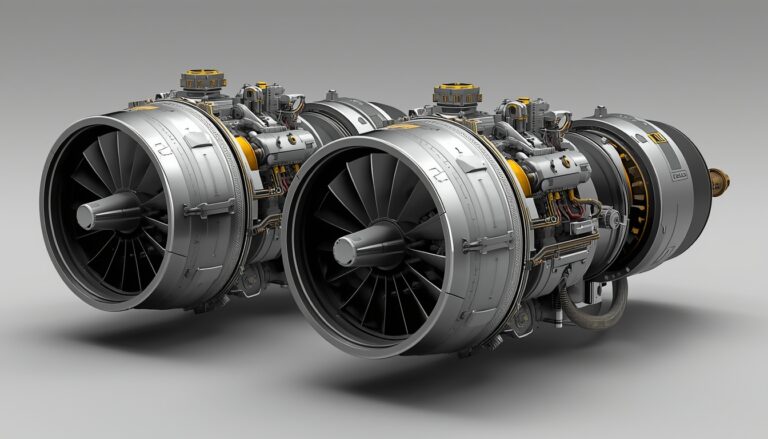
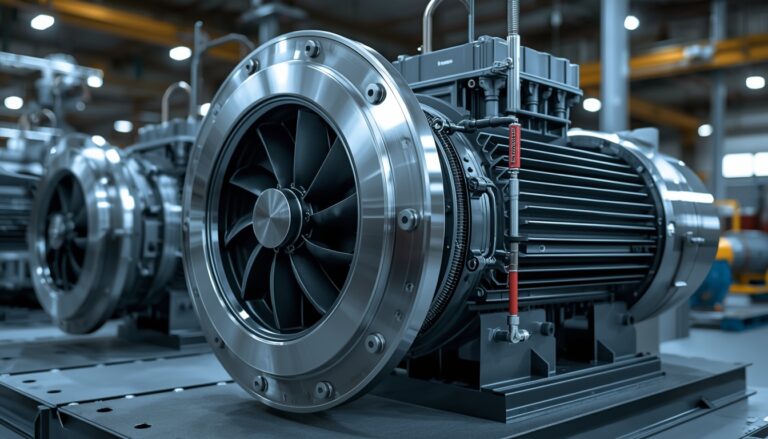
Centrifugal compressors serve as the aerodynamic heart of compact turbomachinery systems spanning micro gas turbines, turbochargers, auxiliary power units, refrigeration compressors, and fuel cell air supply systems. These radial-flow machines convert kinetic energy imparted by high-speed rotating impellers into static pressure through diffusion, achieving pressure ratios of 3:1 to 8:1 per stage in footprints dramatically smaller than equivalent axial compressor configurations. As applications increasingly demand higher power densities, broader operating ranges, and improved fuel economy, the pressure intensifies to extract maximum efficiency from progressively smaller centrifugal compressor geometries. However, the physics of miniaturization proves unforgiving: as impeller diameters shrink below 100 mm and rotational speeds exceed 100,000 rpm, a constellation of adverse scaling effects conspire to degrade performance, with micro-scale compressors (impeller diameters <30 mm) achieving efficiencies 15-25 percentage points lower than their larger counterparts.
The efficiency challenge manifests across multiple coupled domains: aerodynamic losses intensify due to Reynolds number effects and relative geometric constraints, mechanical design limitations constrain achievable geometries, manufacturing precision requirements tighten as tolerances scale disproportionately, and operational stability margins narrow as surge and choke boundaries converge. Unlike large industrial compressors where incremental efficiency improvements of 0.5-1.0% justify substantial development investments, compact turbomachinery must overcome fundamental 10-15% efficiency deficits before reaching competitive performance levels. This context transforms centrifugal compressor development for compact applications from an optimization exercise into a multi-physics challenge requiring simultaneous advances in aerodynamic design, precision manufacturing, material science, and rotordynamic integration. Understanding these interrelated challenges and the emerging solutions represents critical knowledge for engineers pursuing the next generation of high-efficiency compact turbomachinery.
Aerodynamic Loss Mechanisms in Compact Geometries
Reynolds Number Effects and Viscous Loss Amplification
The most pervasive performance degradation mechanism affecting compact centrifugal compressors stems from operation at low Reynolds numbers where viscous forces dominate inertial forces, thickening boundary layers and amplifying friction losses throughout the flow path. Reynolds number—the dimensionless ratio of inertial to viscous forces—scales linearly with characteristic dimensions and velocities while inversely with kinematic viscosity. As compressor scale decreases, achieving Reynolds numbers above the critical threshold of approximately 200,000 (where boundary layer transition to turbulence occurs and viscous losses stabilize) becomes progressively difficult without resorting to extremely high rotational speeds or elevated operating pressures.
Experimental characterization of micro-scale centrifugal compressors reveals severe efficiency penalties at Reynolds numbers below 100,000, with losses increasing inversely proportional to Reynolds number following relationships derived from pipe flow friction correlations. Analytical models suggest that approximately 70% of Reynolds-dependent losses correlate with viscous effects, with the remaining 30% representing Reynolds-independent contributions from incidence losses, secondary flows, and flow separation. The narrowest flow passages—typically at impeller outlet where blade height reaches minimum values—experience the most severe viscous penalties, as boundary layer thickness becomes comparable to passage dimensions creating substantial blockage and degrading effective flow area.
Computational fluid dynamics (CFD) investigations quantifying individual loss mechanisms in micro-scale impellers demonstrate that friction losses between fluid and casing surfaces increase dramatically at high mass flow rates where elevated velocities amplify shear stresses, while secondary flow losses dominate at low mass flows where strong velocity gradients perpendicular to primary flow direction generate cross-channel vorticity. The viscous sublayer in laminar or transitional boundary layers exhibits velocity profiles fundamentally different from turbulent cases, producing higher skin friction coefficients and increased sensitivity to surface roughness. Relative surface roughness—the ratio of surface irregularity height to passage hydraulic diameter—grows disproportionately as dimensions shrink, further exacerbating viscous losses in micro-scale geometries.
Mitigation strategies addressing Reynolds number effects include: operating at elevated pressures increasing air density and consequently Reynolds number without speed increases, surface finishing achieving mirror-polish blade and shroud surfaces minimizing roughness contributions, and design optimization at representative low Reynolds numbers rather than extrapolating from large-scale compressor correlations developed for fully turbulent flows. However, fundamental thermodynamic constraints limit achievable improvements, as scaling laws dictate that below certain size thresholds, practical Reynolds numbers cannot reach regimes where efficiency approaches large-compressor values regardless of design sophistication.
Tip Clearance Losses and Scaling Penalties
Tip clearance—the radial gap between impeller blade tips and stationary shroud surfaces—represents a critical loss mechanism in centrifugal compressors, permitting high-pressure fluid on blade pressure surfaces to leak across blade tips to low-pressure suction surfaces without performing useful compression work. This leakage flow generates complex three-dimensional vortical structures that mix with the main passage flow, dissipating kinetic energy while creating blockage that reduces effective flow area and degrades performance. Extensive experimental and numerical research characterizes tip clearance sensitivity: each 1% increase in clearance ratio (tip gap divided by blade exit height) produces approximately 0.35-0.45 percentage point reduction in isentropic efficiency at design speed, with sensitivities varying across the operating envelope and peaking during transonic operation.
The scaling penalty for compact compressors arises because absolute manufacturing tolerances—determined by machining capabilities, thermal expansion uncertainties, and assembly stack-up variations—do not scale proportionally with machine size. A 0.1 mm tip clearance may represent just 1% of blade height in a 150 mm diameter impeller but constitutes 5-10% in a 30 mm micro-scale design, amplifying leakage losses five to tenfold. Manufacturing tolerances tighten dramatically for small impellers: achieving clearance ratios below 2-3% in micro-scale designs demands tolerances of ±0.02 mm or tighter, approaching limits of conventional machining and assembly processes.
Computational studies on micro gas turbine centrifugal compressors demonstrate that increasing tip clearance from 0.2 mm to 1.0 mm in a 30 mm diameter impeller produces efficiency degradation exceeding 10 percentage points, with leakage mass flow reaching 15-20% of inlet flow at the largest clearances. The leakage jet emerging from the clearance gap interacts with the main passage flow creating tip leakage vortices that propagate downstream into the diffuser, disturbing pressure recovery and potentially triggering diffuser stall at operating points where the compressor would otherwise remain stable. Clearance sensitivity exhibits complex dependencies on blade loading, impeller rotational speed, and flow coefficient, with maximum loss generation occurring at intermediate mass flows where pressure differentials across blade tips peak.
Advanced design approaches mitigating clearance penalties include: employing unshrouded impellers with blade tip geometries optimized for leakage control, implementing recessed shroud pockets creating favorable tip flow conditions, utilizing abradable shroud coatings allowing tighter running clearances through controlled interference, and active clearance control systems adjusting shroud position based on operating conditions. However, mechanical and thermal constraints limit practical implementation in compact turbomachinery, where limited radial space precludes complex tip treatment geometries and cost constraints preclude sophisticated active control systems.
Diffuser Design Challenges and Pressure Recovery
Vaneless and Vaned Diffuser Trade-offs
The diffuser system—downstream of the impeller converting high-velocity kinetic energy into static pressure through controlled deceleration—critically determines overall compressor efficiency and operating range. Vaneless diffusers employing simple annular passages with gradually increasing flow area offer maximum operating range, tolerance to off-design conditions, and minimal manufacturing complexity but sacrifice absolute pressure recovery and efficiency compared to vaned configurations. Vaned diffusers incorporating airfoil-shaped vanes guiding flow deceleration achieve superior pressure recovery coefficients (0.70-0.85 versus 0.50-0.65 for vaneless designs) and enable more compact radial envelopes, but narrow the stable operating range between surge and choke while introducing manufacturing complexity and cost.
Compact turbomachinery diffuser design confronts severe geometric constraints: limited radial space restricts diffusion length requiring aggressive area ratios that risk boundary layer separation, while packaging requirements demand short axial lengths creating three-dimensional flow distortions. The adverse pressure gradient inherent to diffusion—static pressure increasing in the flow direction—destabilizes boundary layers making them prone to separation, particularly in regions experiencing combined radial and axial turning. High streamwise pressure gradients characteristic of compact diffusers produce rapid boundary layer growth rates with total pressure losses concentrated near hub and shroud end walls where secondary flow structures generate entropy.
Variable geometry diffuser systems employing adjustable vane angles optimize performance across varying operating conditions, improving both efficiency and surge margin by adapting diffuser geometry to inlet flow angles varying with compressor speed and mass flow. Experimental investigations demonstrate that optimizing diffuser vane position can improve efficiency 2-3 percentage points while extending surge-free operating range by 10-15% compared to fixed-geometry equivalents. However, actuation mechanisms, sealing requirements, and control system complexity add mass, cost, and potential failure modes restricting variable geometry adoption primarily to large industrial compressors and turbocharger applications where performance justifies added complexity.
Design optimization for compact diffusers emphasizes: wedge or channel diffuser configurations balancing pressure recovery against manufacturing simplicity, carefully controlled area ratio progression preventing premature separation, three-dimensional contouring of hub and shroud surfaces managing secondary flows, and integration of diffuser inlet conditions with impeller exit flow characteristics ensuring compatibility across the operating envelope. Computational optimization studies demonstrate potential efficiency improvements of 3-5 percentage points through systematic diffuser redesign, though realizing predicted gains demands high-fidelity manufacturing maintaining designed geometries within tight tolerances.
Surge and Stability Constraints
Surge—a violent flow instability where the compressor momentarily loses the ability to maintain pressure rise causing mass flow reversal, pressure oscillations, and potentially catastrophic mechanical damage—represents the primary operational constraint limiting low-flow performance boundaries for centrifugal compressors. Diffuser stall, occurring when boundary layers separate from vaned diffuser surfaces under adverse pressure gradients at low mass flows, frequently triggers surge by creating large-scale flow blockage rapidly degrading pressure rise capability. Compact compressor geometries exhibit reduced stability margins: shorter diffuser lengths amplify sensitivity to inlet flow distortions, while close-coupled impeller-diffuser interactions strengthen feedback mechanisms between diffuser pressure field and upstream impeller flow.
The physics of surge initiation involves complex unsteady interactions between compressor aerodynamics, downstream plenum volume, throttle characteristics, and system acoustics. Below a critical mass flow threshold, the compressor pressure rise characteristic becomes negatively sloped (pressure rise decreasing with further flow reduction), creating unstable equilibrium where small perturbations trigger large-amplitude oscillations. Prediction and mitigation of surge require coupled analysis of compressor performance maps, downstream system impedance, and transient response characteristics—challenges compounded in compact applications where rapid response times and limited instrumentation access complicate experimental characterization.
Surge margin—the percentage flow reduction from design point to surge line—typically ranges 15-25% for well-designed centrifugal compressors, but can narrow to 5-10% in compact configurations with aggressive performance targets or unfavorable geometric constraints. Variable diffuser geometry provides the most effective surge margin extension by adapting diffuser throat area and vane angles to maintain attached flow at low mass flows, though at cost and complexity penalties. Alternative approaches include: active flow control through boundary layer suction or injection, non-axisymmetric vaned diffuser designs creating circumferential variations suppressing rotating stall precursors, and inlet guide vane systems pre-swirling inlet flow to modify impeller incidence angles and pressure rise characteristics.
Manufacturing and Tolerance Challenges
Precision Machining and Surface Quality Requirements
Manufacturing centrifugal compressor components achieving design performance requires precision five-axis machining capabilities, specialized tooling for complex three-dimensional blade surfaces, and rigorous quality control protocols validating geometric conformance within tolerances typically ranging ±0.02-0.05 mm for compact applications. Impeller fabrication presents particular challenges: thin blades (0.5-1.5 mm thickness) with complex sculptured surfaces spanning inlet to exit diameters, compound curvature requiring simultaneous control of lean and sweep angles, and fillet radii at blade-hub interfaces affecting secondary flow generation and structural integrity.
Surface finish quality directly impacts aerodynamic performance through its influence on boundary layer development and transition to turbulence. Experimental studies demonstrate that reducing average surface roughness from 1.6 μm Ra (standard machining finish) to 0.4 μm Ra (polished finish) can improve efficiency 1-2 percentage points in micro-scale compressors where relative roughness effects prove significant. Achieving mirror-polish blade surfaces requires secondary operations—electropolishing, vibratory finishing, or manual polishing—adding manufacturing cost and complicating dimensional control as material removal during polishing must not violate geometric tolerances.
Impeller Size | Blade Height (mm) | Clearance Target | Tolerance Budget |
Large (150 mm dia) | 10.0 | 1% = 0.10 mm | ±0.05 mm |
Medium (75 mm dia) | 4.0 | 2% = 0.08 mm | ±0.03 mm |
Small (30 mm dia) | 1.5 | 3% = 0.045 mm | ±0.015 mm |
Micro (15 mm dia) | 0.6 | 5% = 0.030 mm | ±0.010 mm |
Table 1: Scaling of clearance tolerance requirements with impeller size
Advanced manufacturing technologies address precision challenges: five-axis wire electrical discharge machining (EDM) enables complex blade geometries in difficult-to-machine materials like titanium alloys, additive manufacturing (3D printing) facilitates integrated impeller-shaft assemblies eliminating joints and improving concentricity, and abrasive flow machining polishes internal passages inaccessible to conventional tooling. However, each technology introduces distinct limitations: EDM produces re-cast surface layers requiring removal, additive manufacturing exhibits higher surface roughness and potential internal porosity, and abrasive flow machining offers limited control over selective material removal patterns.
Assembly Stack-up and Alignment Control
Compact centrifugal compressor assemblies integrate rotating impellers, stationary diffuser components, bearing systems, and sealing elements within precisely aligned housings maintaining critical clearances and concentricity requirements. Assembly processes introduce tolerance stack-up where individual component variations accumulate, potentially producing total indicated runout (TIR) and clearance distributions exceeding acceptable limits. Achieving target performance demands systematic tolerance analysis, selective assembly practices matching components based on measured dimensions, and precision assembly fixtures maintaining alignment during fastening operations.
Bearing system concentricity critically affects rotor dynamic behavior and clearance uniformity. Journal bearing or ball bearing mounting surfaces requiring concentricity within 0.01-0.02 mm TIR relative to impeller bore, while maintaining perpendicularity to shaft axis preventing cocked assemblies. Diffuser alignment relative to impeller exit conditions affects incidence angles and pressure recovery, with misalignment of 1-2° producing measurable efficiency degradation. Sealing clearances at impeller inlets and shaft penetrations balance leakage minimization against rub avoidance during transient thermal and mechanical deformations.
Quality assurance protocols for compact compressor manufacturing include: coordinate measuring machine (CMM) inspection of critical blade and housing profiles, optical scanning verifying complex three-dimensional surfaces, flow testing of production units characterizing performance repeatability, and statistical process control monitoring dimensional trends identifying tool wear or process drift. Establishing capability indices (Cpk) exceeding 1.33 for critical dimensions ensures that normal manufacturing variation remains within specification limits with adequate margin, though achieving such capability for micro-scale tolerances demands process optimization and continuous improvement disciplines uncommon in low-volume aerospace production environments.
Advanced Design Methods and Emerging Solutions
Multi-Objective Computational Optimization
Modern centrifugal compressor design increasingly relies on automated multi-objective optimization coupling high-fidelity CFD simulations with genetic algorithms, response surface methods, or machine learning surrogates exploring vast design spaces far beyond manual iteration capabilities. Optimization frameworks simultaneously address competing objectives: maximizing isentropic efficiency, widening surge margin, minimizing radial envelope, controlling exit flow uniformity, and constraining mechanical stresses to allowable limits. Parametric blade geometry descriptions employing Bézier curves, B-splines, or analytical equations enable systematic variation of blade angles, thickness distributions, lean and sweep characteristics, and leading/trailing edge definitions across dozens of design variables.
Representative optimization studies on centrifugal compressor impellers demonstrate efficiency improvements of 3-5 percentage points and pressure ratio gains of 5-10% relative to baseline designs through systematic aerodynamic refinement. Successful optimization demands: high-quality baseline designs providing favorable starting points, physically-meaningful design constraints preventing unrealistic geometries, multi-point objective functions evaluating performance across operating ranges rather than single conditions, and manufacturing constraints ensuring optimized geometries remain producible with available processes.
Adjoint-based optimization methods computing sensitivity gradients of performance metrics with respect to all design variables enable efficient exploration of high-dimensional design spaces, identifying optimal geometries in hundreds rather than thousands of design evaluations. Integration of surrogate models—neural networks or kriging approximations trained on CFD results—further accelerates optimization by substituting computationally expensive simulations with rapid approximate evaluations during early exploration phases, reserving high-fidelity validation for promising candidate designs.
Additive Manufacturing and Geometric Freedom
Additive manufacturing (AM) technologies—selective laser melting, electron beam melting, binder jetting—enable centrifugal compressor geometries previously impossible through conventional subtractive machining, including: organically-curved splitter blades optimizing flow capacity without secondary machining access requirements, integrated impeller-shaft assemblies eliminating stress concentration at mechanical interfaces, and internal cooling passages within solid blade sections managing thermal loads in high-temperature applications[21]. Material consolidation through AM reduces part counts, eliminates assembly tolerance stack-up, and potentially improves structural efficiency through topology optimization allocating material where structural loads concentrate.
However, AM introduces distinct challenges for precision aerodynamic components: as-built surface roughness (10-25 μm Ra for common processes) far exceeds acceptable aerodynamic finishes requiring extensive post-processing, dimensional accuracy (±0.05-0.10 mm typical) proves marginal for small blade features, internal porosity risks exist without optimized process parameters and quality validation, and material properties (strength, ductility, fatigue resistance) may differ from wrought equivalents requiring qualification testing[21]. Cost structures favor AM for low-volume production and complex geometries but remain uncompetitive against conventional machining for simpler geometries in moderate-to-high volumes.
Emerging hybrid manufacturing approaches combining AM for complex core geometries with subtractive finishing for critical aerodynamic surfaces leverage complementary strengths: design freedom from AM and precision from machining. Successful implementation requires integrated design-manufacturing workflows accounting for AM build orientations, support structure placement and removal, heat treatment distortion, and machining datum establishment. As AM process maturity improves and equipment costs decline, adoption will likely expand from prototype development into production applications where geometric complexity and performance gains justify economic premiums.
Strategic Considerations and Future Outlook
System-Level Integration and Holistic Design
Achieving maximum efficiency in compact centrifugal compressor systems demands holistic integration addressing interactions between compressor aerodynamics, inlet flow conditioning, diffuser-volute coupling, bearing windage losses, seal leakage paths, and thermal management. Inlet guide vanes or inlet volutes must deliver uniform, low-distortion flow to impeller inlets across operating conditions, as non-uniformities generate localized incidence variations degrading performance and potentially triggering premature stall. Exit volutes or collector systems must efficiently gather diffuser discharge flow while producing minimal total pressure loss, requiring careful cross-sectional area progression and tongue design balancing pressure recovery against space constraints.
Bearing system windage—aerodynamic drag from air entrained in bearing cavities—can consume 3-5% of compressor shaft power in high-speed compact machines where bearing diameters approach impeller sizes. Minimizing windage through bearing compartment sealing, optimized cavity geometries, and in some cases evacuation or pressurization strategies recovers shaft power for useful compression. Shaft seal leakage from compressor discharge to inlet represents parasitic loss degrading cycle efficiency, requiring effective labyrinth or mechanical seal designs balancing leakage minimization against manufacturing complexity and reliability.
Future compact compressor development will increasingly employ digital twin methodologies—validated Multiphysics models encompassing aerodynamics, mechanical behavior, thermal response, and control system dynamics—enabling virtual testing of design variants, operational scenarios, and failure modes before hardware commitment. Model-based design optimization incorporating manufacturing constraints, material availability, cost targets, and reliability requirements will systematically explore trade spaces identifying Pareto-optimal solutions balancing competing objectives. Integration of machine learning techniques analyzing operational data from fielded compressors will enable predictive maintenance strategies and performance degradation mitigation extending service life and maintaining efficiency throughout operational lifecycles.
Conclusion
Developing high-efficiency centrifugal compressors for compact turbomachinery applications represents a formidable multi-disciplinary challenge confronting fundamental adverse scaling effects, demanding precision manufacturing approaching practical limits, and requiring sophisticated aerodynamic design addressing complex loss mechanisms across broad operating envelopes. The 15-25 percentage point efficiency deficit typical of micro-scale compressors relative to large industrial units stems from interrelated phenomena: Reynolds number effects amplifying viscous losses, disproportionate tip clearance penalties, diffuser design compromises balancing pressure recovery against stability, and manufacturing tolerance challenges scaling non-proportionally with component dimensions.
Recent advances—multi-objective CFD optimization identifying superior blade geometries, additive manufacturing enabling previously impossible configurations, precision finishing techniques achieving near-mirror surface quality, and variable geometry systems adapting to operating conditions—demonstrate pathways toward improved performance, though fundamental physics constraints limit achievable gains below certain size thresholds. The tension between miniaturization demands (weight, volume, cost reduction) and performance requirements (efficiency, pressure ratio, operating range) will persist, requiring continued innovation in aerodynamic design methods, manufacturing processes, and system integration approaches.
For engineering teams developing next-generation compact turbomachinery—whether micro gas turbines, advanced turbochargers, or miniaturized industrial compressors—centrifugal compressor efficiency directly determines overall system viability, fuel economy, and competitive positioning. Success demands early-phase integration of aerodynamic, mechanical, and manufacturing considerations, comprehensive computational analysis validated against experimental data, and rigorous tolerance management ensuring production hardware delivers predicted performance. Organizations mastering these interdisciplinary challenges will deliver the high-efficiency compact centrifugal compressors enabling step-function improvements in turbomachinery performance across diverse applications worldwide.

Lead Aerodynamics Engineer
An experienced engineer with expertise in turbomachinery, contributing to cutting-edge developments in
aerospace and turbomachinery.